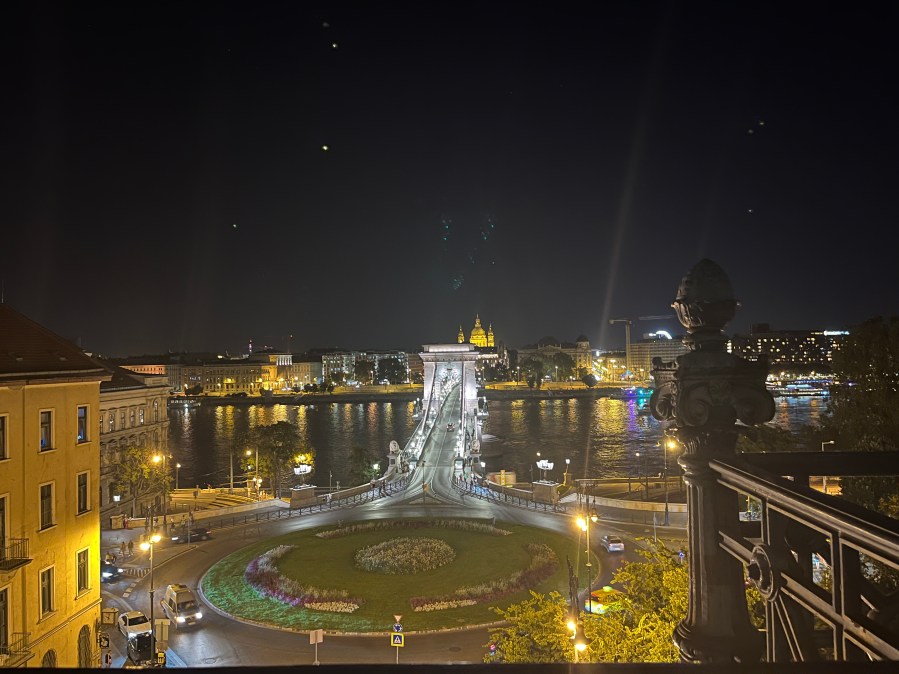
If Rome is the city of seven hills, Budapest is the city of seven bridges. In fact, Budapest did not come in existence until 1873, prior to that it was two cities, Buda and Pest, divided by the Danube River. The process that would merge the two cities began in 1840 with the commencement of construction on a permanent bridge to connect the two cities.

Known as the Lánchíd (lit. ‘lánc’ + ‘híd’, chain bridge), the bridge took nine years to complete and when it opened in 1849 linked the hearts of the two cities. When completed in spanned over two hundred yards and allowed for foot and vehicle traffic. The Lánchíd is also at the heart of the city’s identity as the first and the most central, it figuratively represents the merged city of Budapest. Next year will mark the 175th anniversary of the opening of the bridge, so in 2021 the bridge the Hungarian government closed the bridge for refurbishment and reopened last month. In celebration of the reopening and also to mark the 150thanniversary of the unification of Budapest, the city hosted the Lánchíd Fesztival including a free, public, open-air concert with many of Hungary’s popular musicians performing songs about the city. Below are some of the photos I took.
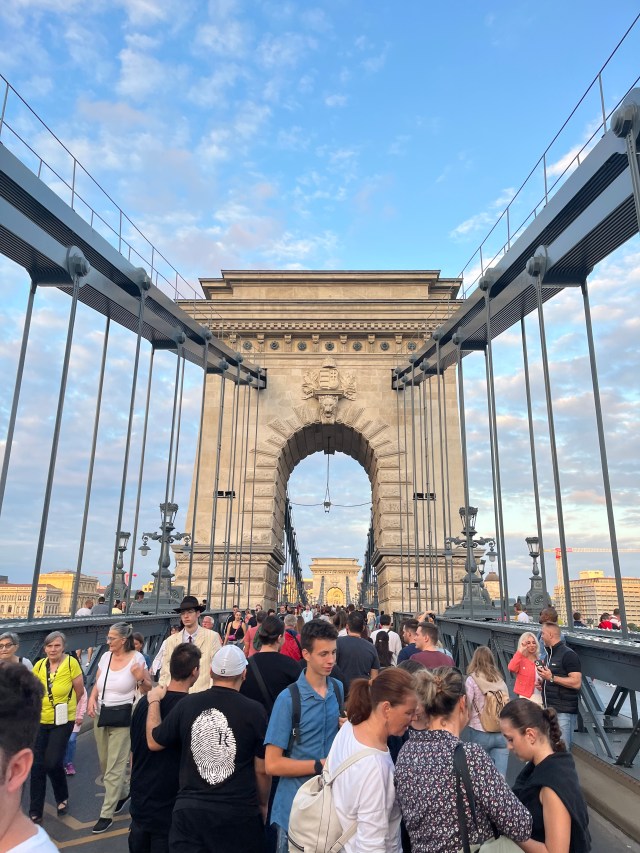
Walking on the bridge, it’s possible to start to understand why it is the heart of the city. Not only is the bridge politically significant, it is also a beautiful structure.
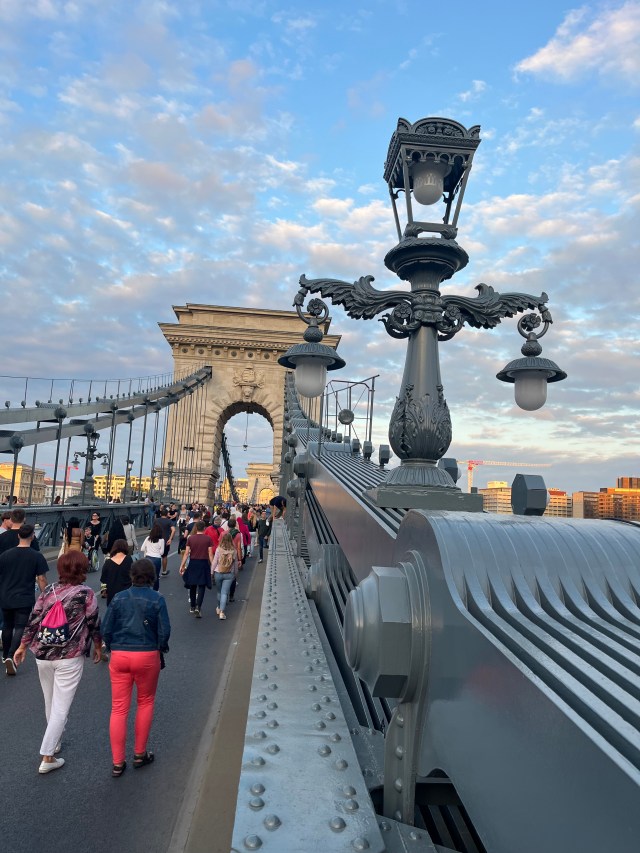
Up close, it becomes possible to see the “links” that give the bridge its name.
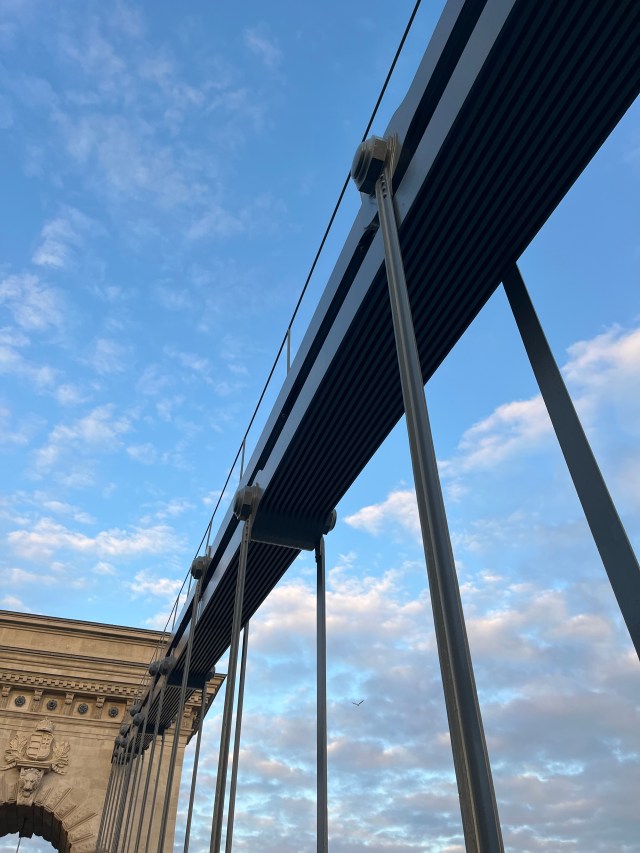
There are thousands of these wrought-iron links that form the parallel chains that suspend the bridge.
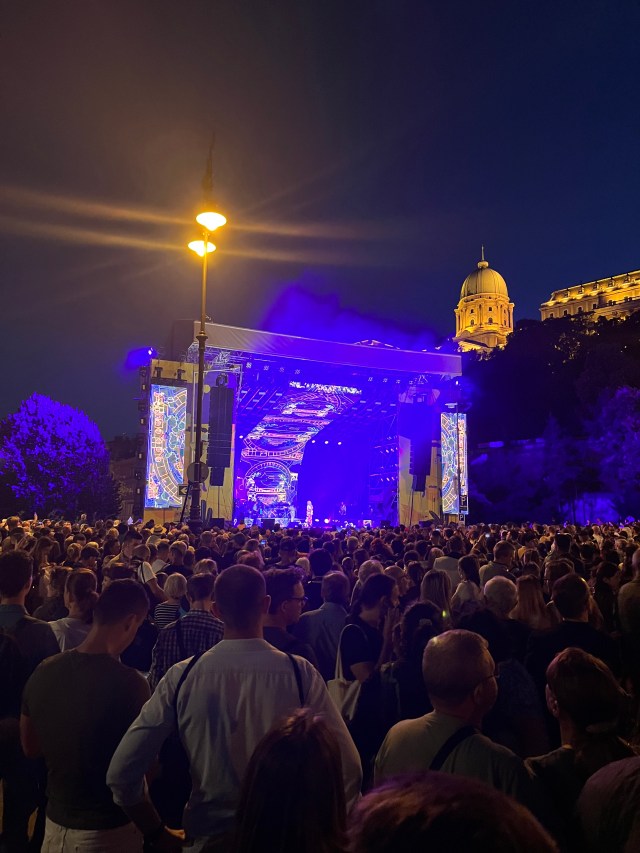
This is only a small portion of the crowd present for the concert and the multi-day celebration of the reopening.

The Lánchíd Festztivál is also part of the celebration of the 150th anniversary of the unification of Budapest.
 Patrick C. Leech
Pingback: Library and Information Center of the Hungarian Academy of Sciences – Patrick C. Leech