
One of my favorite moments when teaching history is when a student realizes the way a specific event in the past directly affects them. The American Historical Association is fond of the phrase “Everything has a History.” Yet this disconnect between past and present is rather foreign to Hungarian culture, a notable example of this is the Treaty of Trianon. Few Americans know of this treaty yet most every Hungarian over ten does. The typical US History class about World War I ends with a brief description about Woodrow Wilson’s Fourteen Points and Wilson’s participation in the peacemaking in Paris that led to the Treaty of Versailles. Most do not even fully grasp that the US did not actually ratify the Treaty of Versailles, largely due to domestic political rivalries, much less learn that there were separate peace treaties with Germany, Austria, Hungary, and Turkey. While this oversight is understandable, after all most teachers do not know about them either, it does mean a bit of background is needed.
At the start of World War I, the Kingdom of Hungary was part of the Habsburg Dual Monarchy also known as the Austro-Hungarian Empire (that is a whole topic for another post). The power-sharing agreement, setup in 1867, meant that Hungary had its own Prime Minister who participated in the foreign policy process for both Austria and Hungary. Following the 1914 assassination of the Archduke Franz Ferdinand and his wife in Sarajevo, the Austrian leadership wanted to pursue war against Serbia, but the Hungarian government was not. It did acquiesce, but after extracting concessions, yet this proved meaningless when they lost the war. However, that reluctance laid the groundwork for Hungary’s historical narrative of being a coerced combatant in the war. This idea of reluctance became a core part of the opposition to the peace.
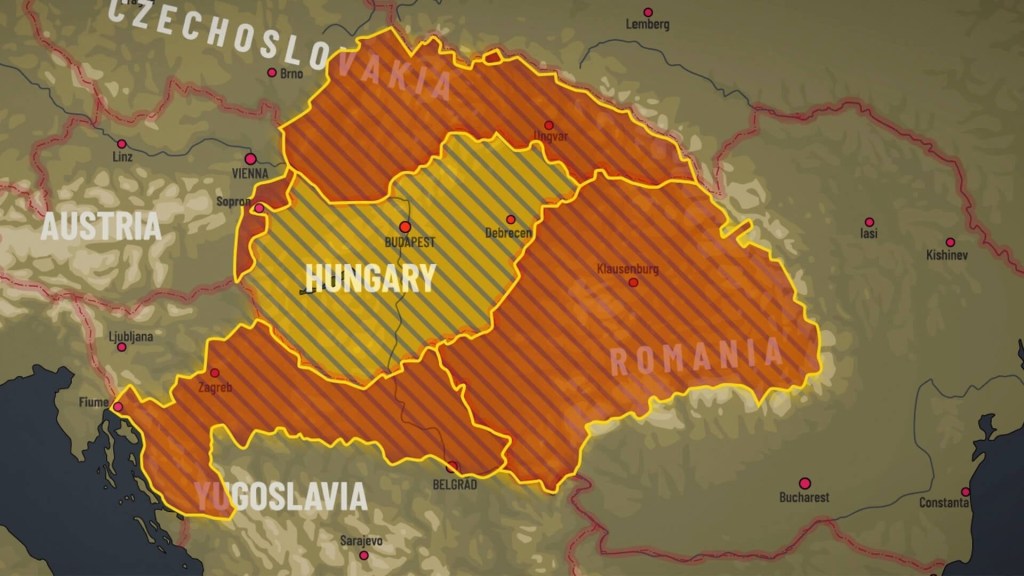
After the war, the Entente Powers (US, UK, France, & Italy) required Austria and Hungary to adopt democratic forms of governance and then presented each with separate peace terms that were non-negotiable. The Hungarian treaty was signed in the town of Trianon, hence the name, and resulted in the Kingdom of Hungary losing seventy percent of its prewar territory and sixty-six percent of its prewar population, including over three million Hungarians, ceded to its various neighbors: Romania, Ukraine, Czechoslovakia, Yugoslavia, and Austria. Thus, the Treaty of Trianon is part of why we met Hungarians in Romania. It also contributed to Hungary allying with Germany during World War II, and Hungary’s perpetual concern for the treatment of ethnic Hungarians by its neighbors.
This is why, the Hungarian government constructed a massive “Memorial of National Unity” that opened in 2020.

The memorial is one hundred meters long, representing the hundredth anniversary of the treaty.
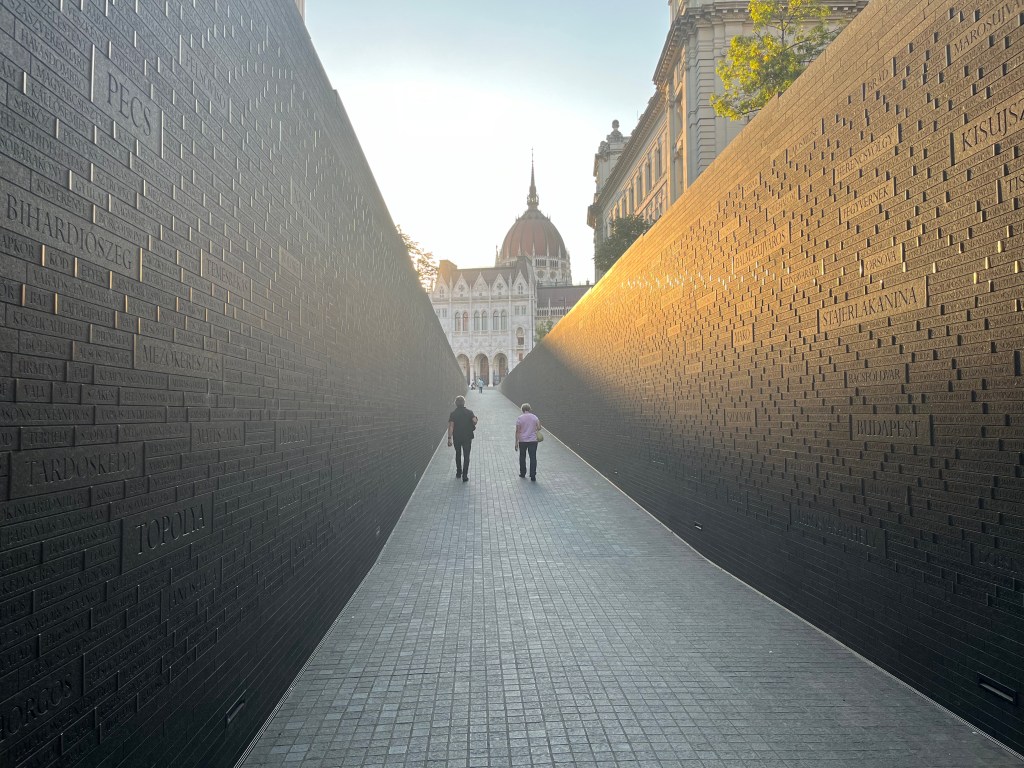
It contains the names of over 13,000 cities, towns, and villages.

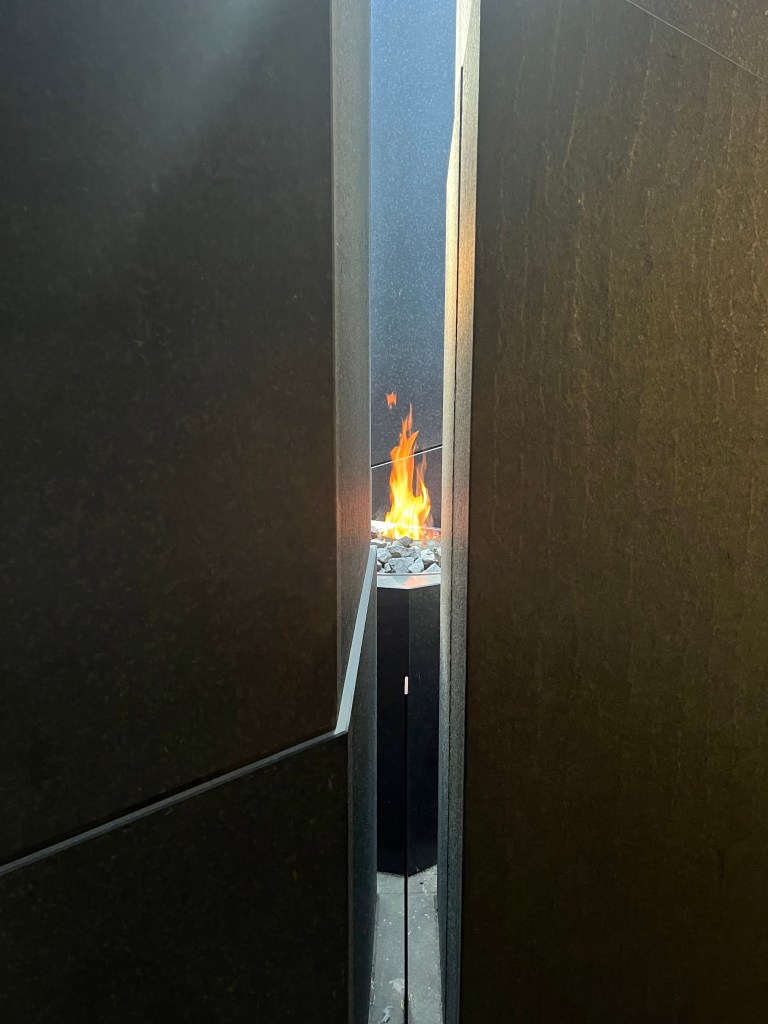
It descends into a covered area where an eternal flame is enclosed in symbolically broken granite.
 Patrick C. Leech