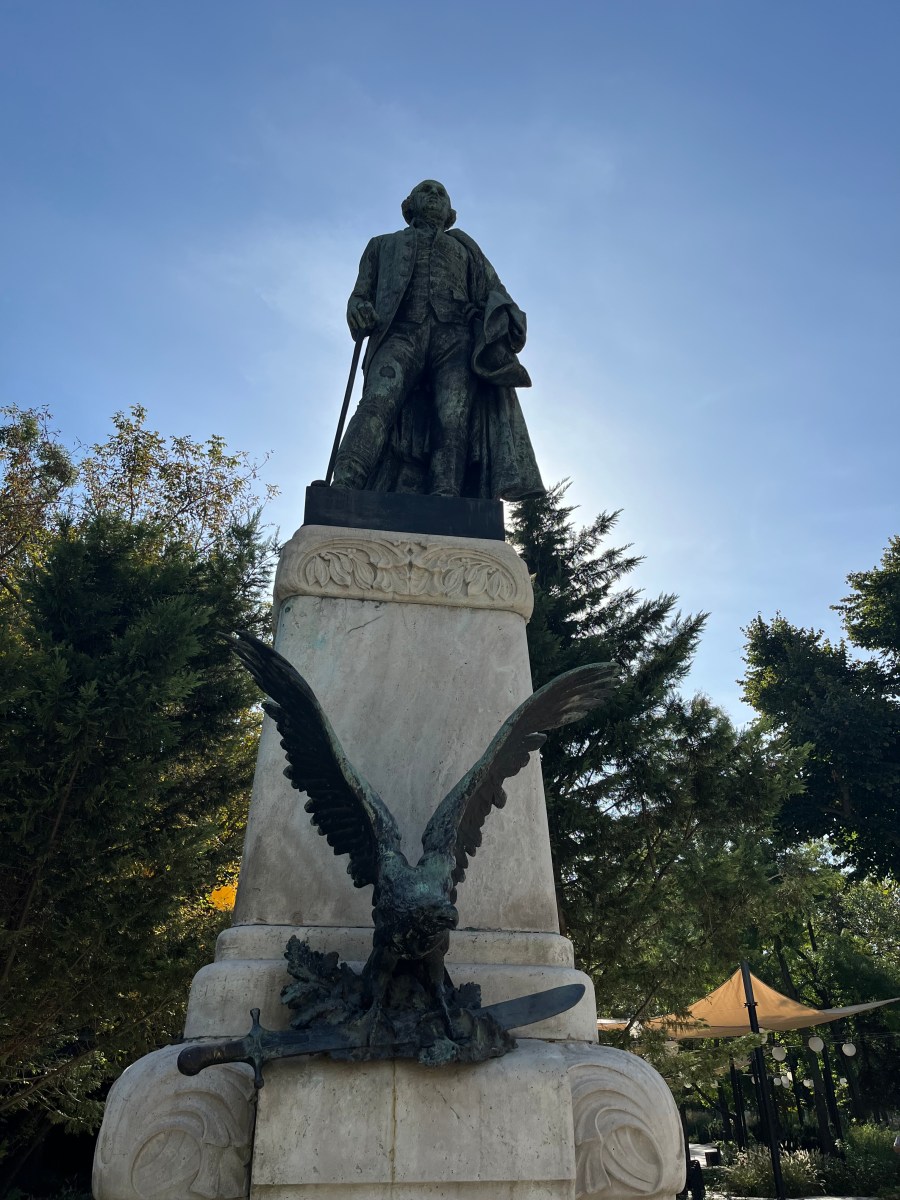
Last week I visited the Zene Háza (Music House) in Budapest’s City Park and while there I stumbled on a minor site that I wanted to find, a statue of George Washington. I am interest in this statue for a couple of reasons including that it is purported to be the only statue of Washington behind the Iron Curtain that was not destroyed, removed, or relocated. Beyond the trivial, it also marks the work of the American Hungarian Federation which is one of the diaspora institutions that I am researching. They commissioned the Washington statue as counterpart to a statue of Lajos Kossuth in Cleveland, Ohio. Kossuth is often referred to as the father of democratic Hungary and a committee formed to setup a statue of him in Cleveland formed in 1902.
That committee eventually became the American Hungarian Federation. According to their own history, following the absence of anyone from Hungarian at the dedication of the Kossuth statue, the committee worked to setup a statue of Washington, sometimes dubbed the father of the United States, in Budapest to commemorate the cultural ties between the United States and the Kingdom of Hungary. A Cleveland-based newspaper editor initiated the fundraising campaigns for each statue which resulted in one of the first attempts to coordinate various local Hungarian cultural institutions dispersed across the United States. As a result, the American Hungarian Federation played a significant role in the efforts to resettle Hungarian refugees in 1956-1957.
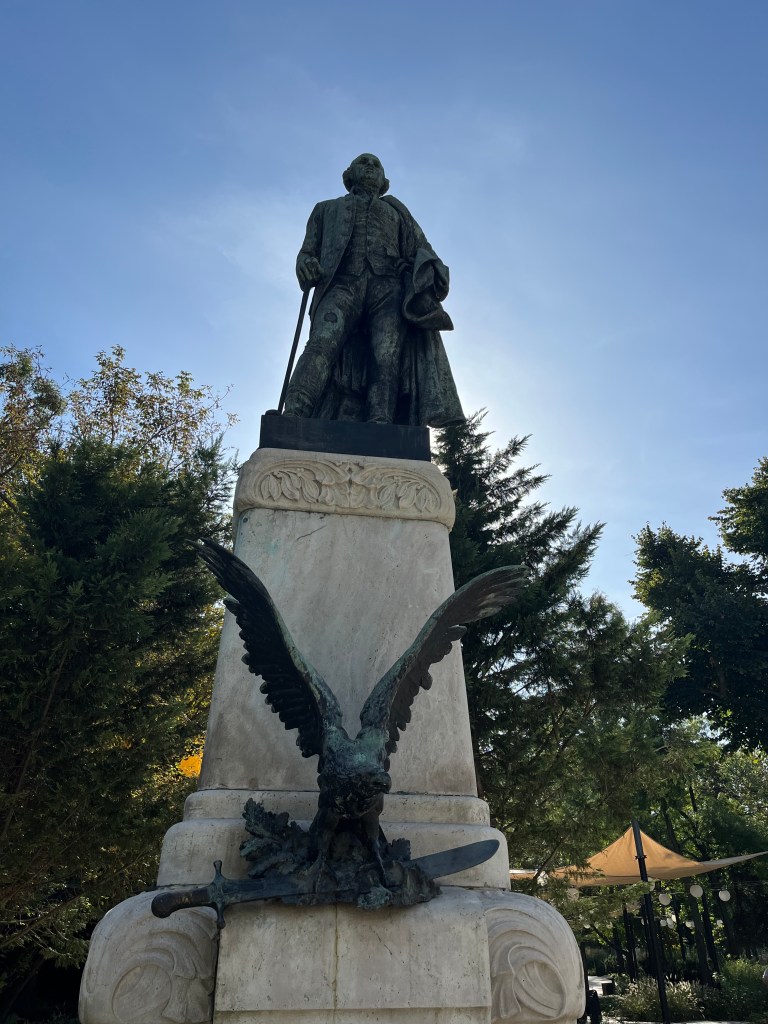
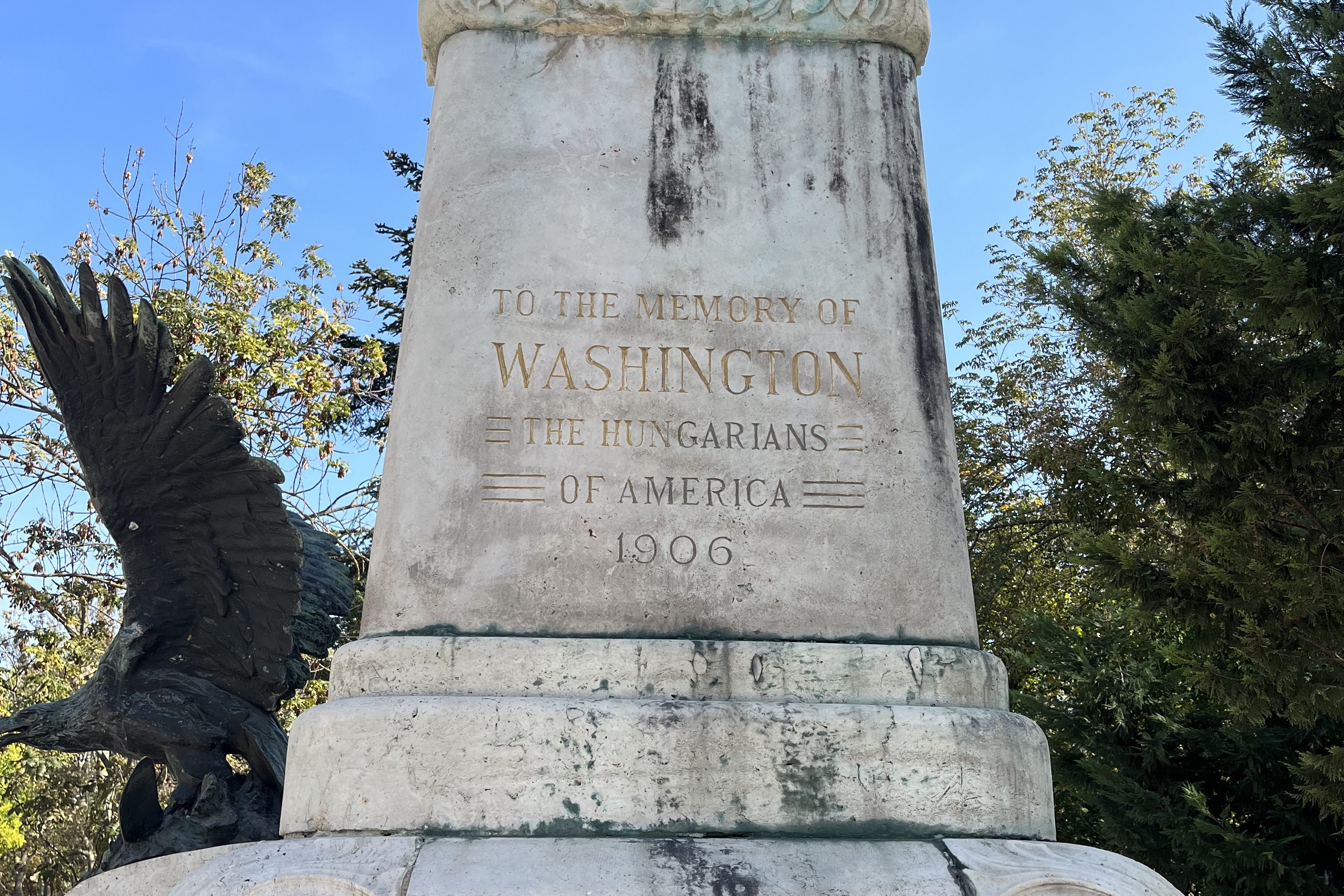
The statue was revealed in 1906 and includes the inscription “To the memory of George Washington, The Hungarians of America, 1906.” [Inscript] For the Hungarian American community the Kossuth and Washington statues not only symbolized the ties between the two countries, they also visually represented the community’s claim to being American during a time of rising anti-immigrant sentiments within the United States.
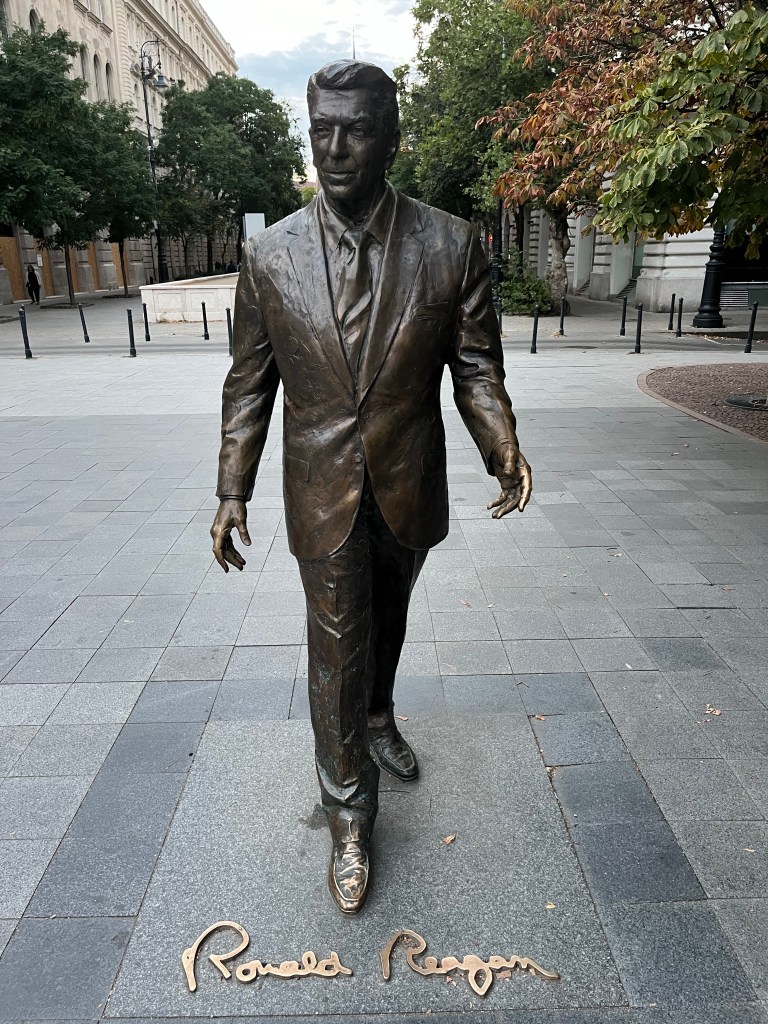
Yet Washington is not the only US president making an appearance in Budapest. In Szabadság tér— “Liberty Square”—larger-than-life statues of both Ronald Reagan and George H.W. Bush stand a few yards from the gates of the US Embassy. In Hungary, these two are credited with successfully navigating the end of the Cold War.
Since 2011, the Reagan statue stands with the Parliament building in the background while the Bush statue stands in front of the embassy itself.
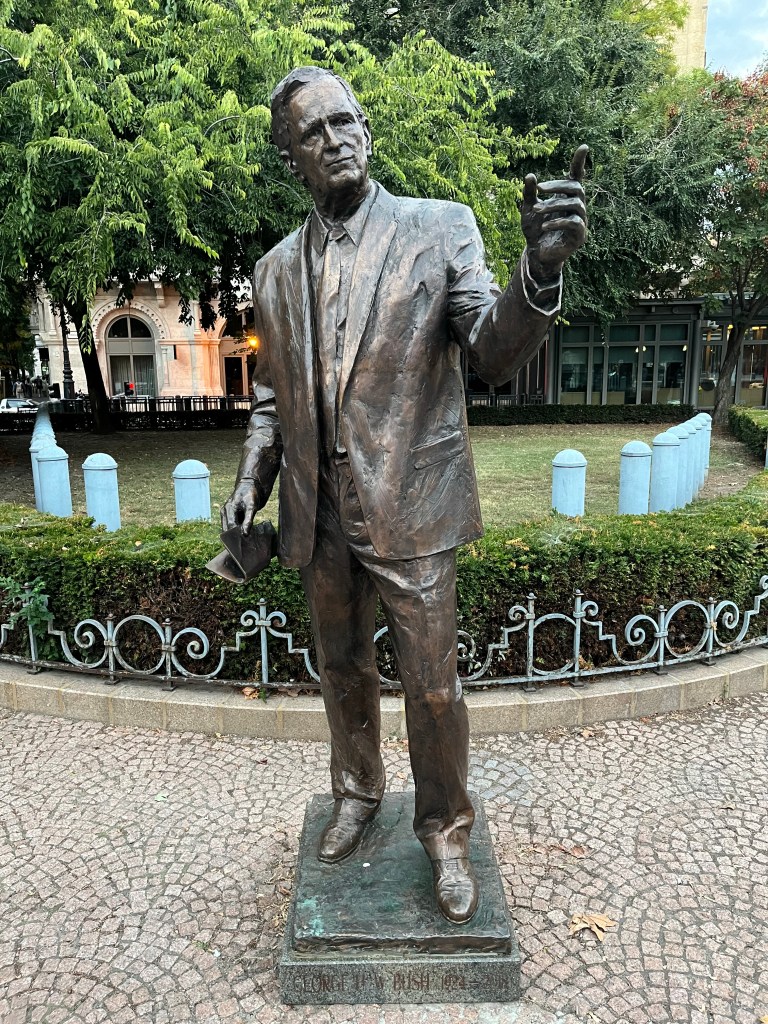
Erected in 2020, the Bush statue depicts the president holding a shred of paper which points back to his 1989 speech in Budapest where he ripped up his rain-soaked text in the middle of his delivery.
 Patrick C. Leech