Note: This post is later than expected partly because my schedule was unusually busy last week but also because the post I started to write was too long and winding. I will come back to that topic, but in the interim I thought I would offer this brief glimpse into how historian’s work. -PCL
Yesterday (Oct. 29) I returned to the Hungarian National Museum, both visits will provide material for future posts. I primarily went to see a temporary exhibit of photographs from John Sadovy during the 1956 Hungarian Revolution. Yet, since I was there, I finished walking through the permanent exhibit.
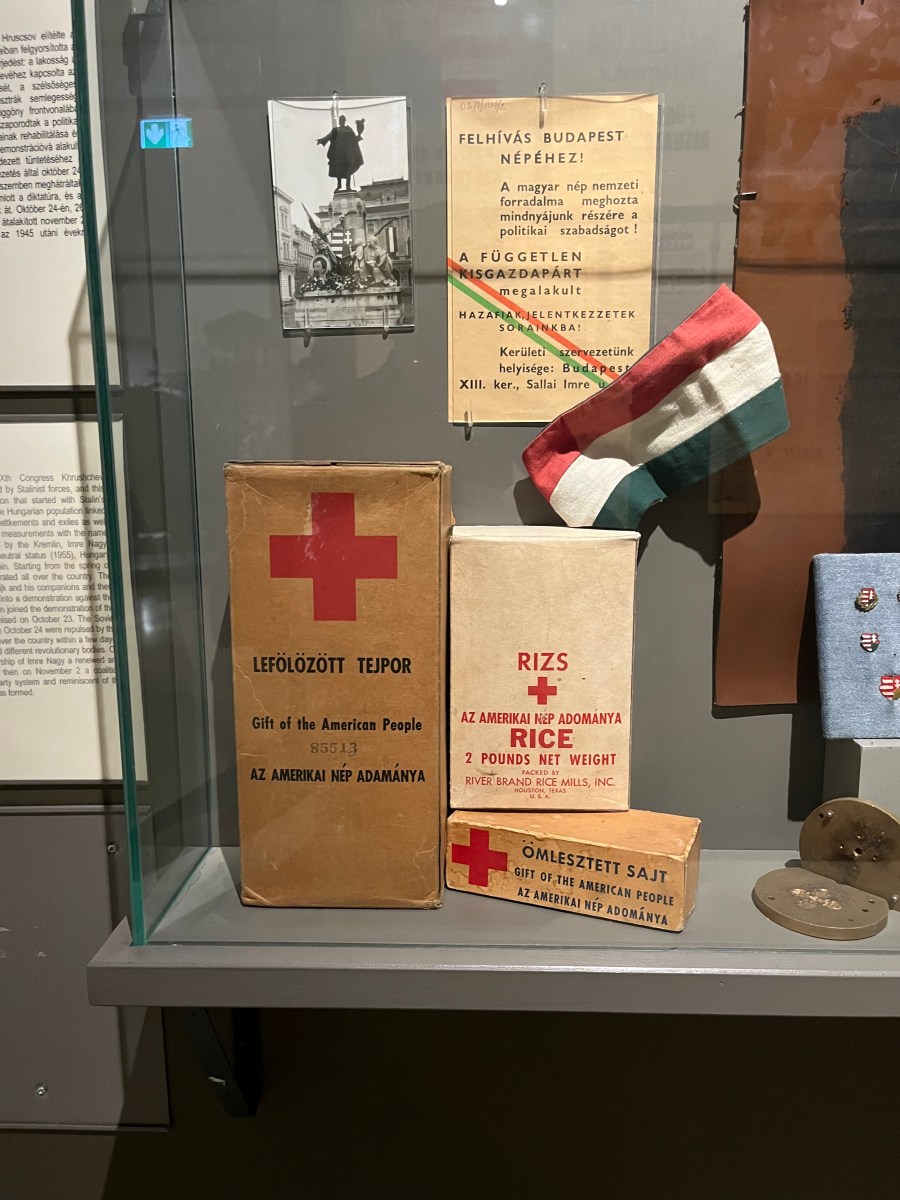
While looking at the displays related to the 1956 Uprising, I noticed one with several small boxes. These boxes are part of aid packages sent by Americans to Hungary which included, powdered skim milk (lefölözött tejpor), rice (rizs), and processed cheese (ömlesztett sajt), among other items. They also prominently carry a red cross and the label “Gift of the American People.”
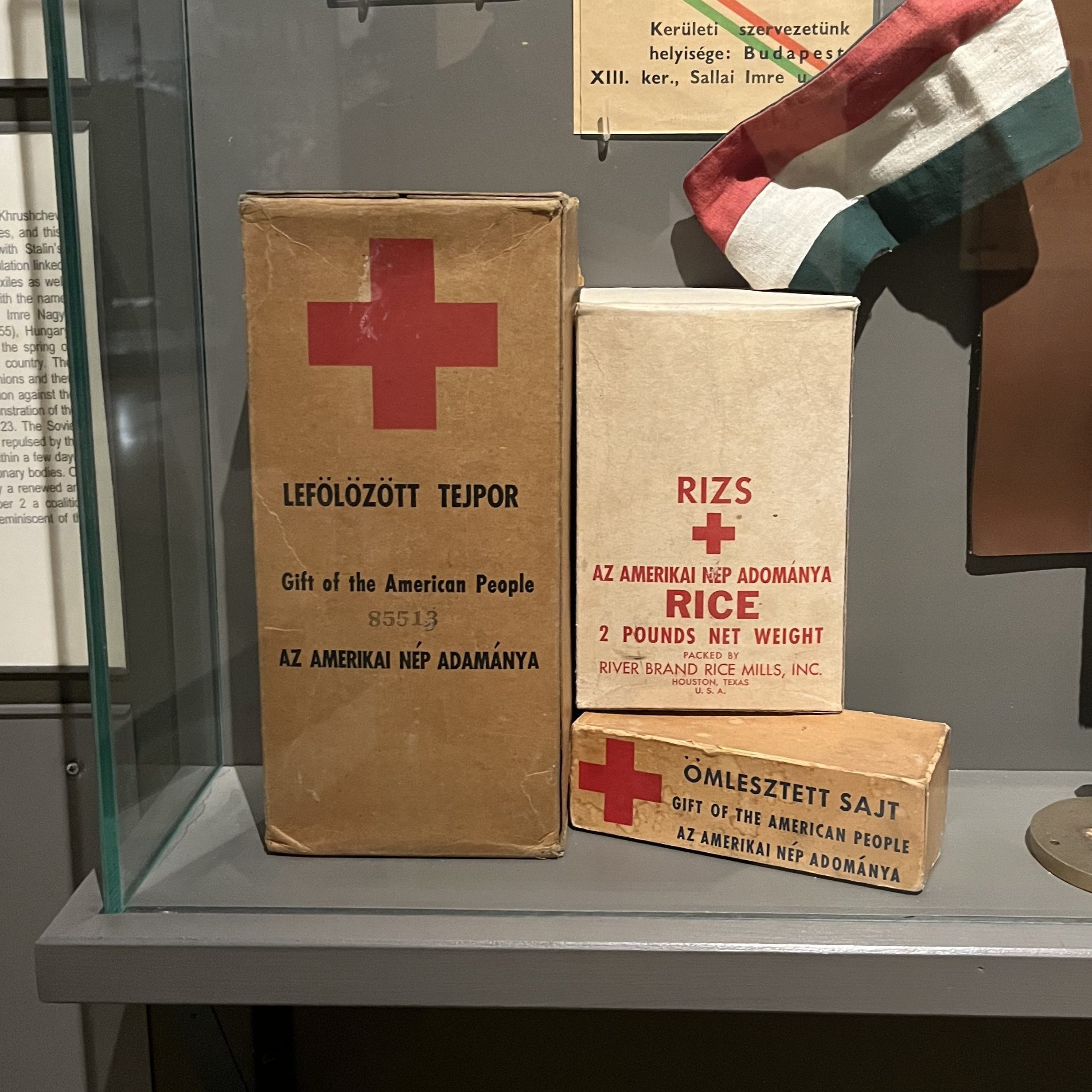
These stood out because I am in the middle of reading numerous Hungarian-language newspapers from the Hungarian diaspora in the United States. These papers included several advertisements for sending aid packages. Plus, they describe the work of the League of Red Cross Societies (the global entity which includes the American Red Cross) to provide relief and aid for Hungarians in Austria and within Hungary.
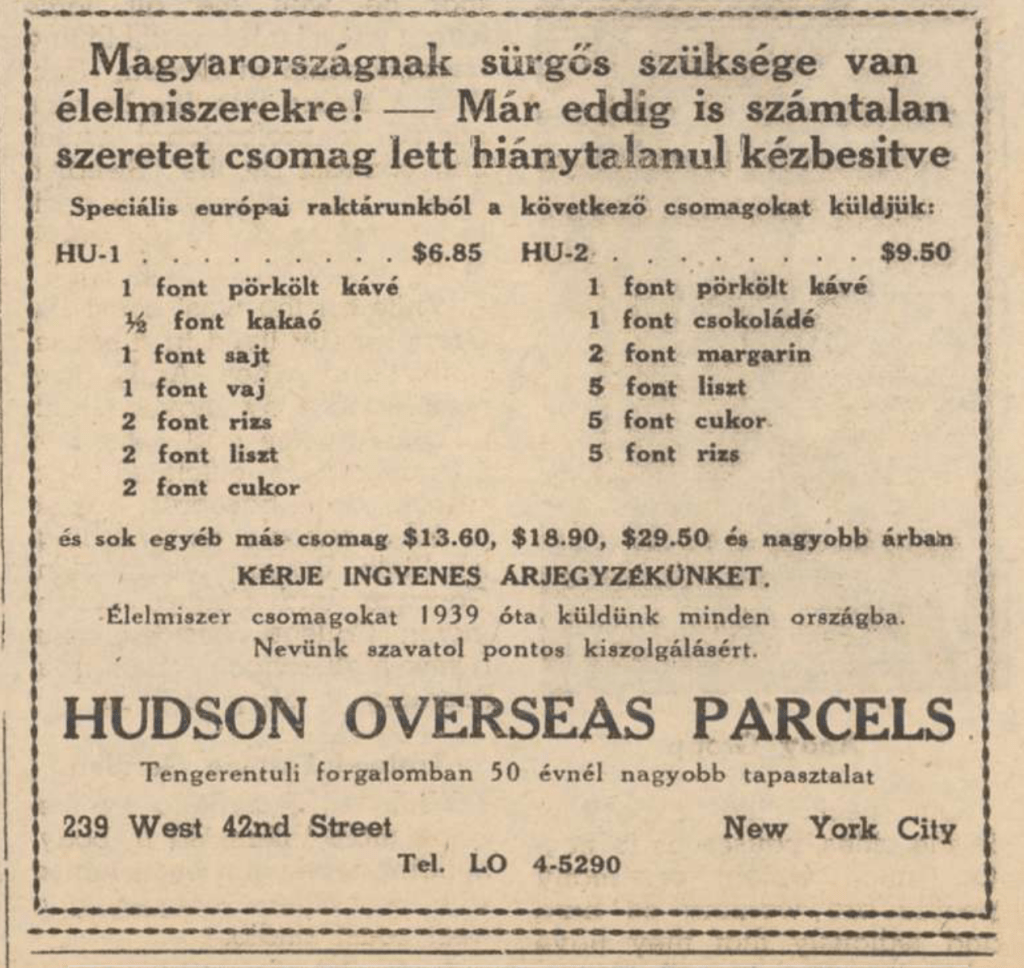
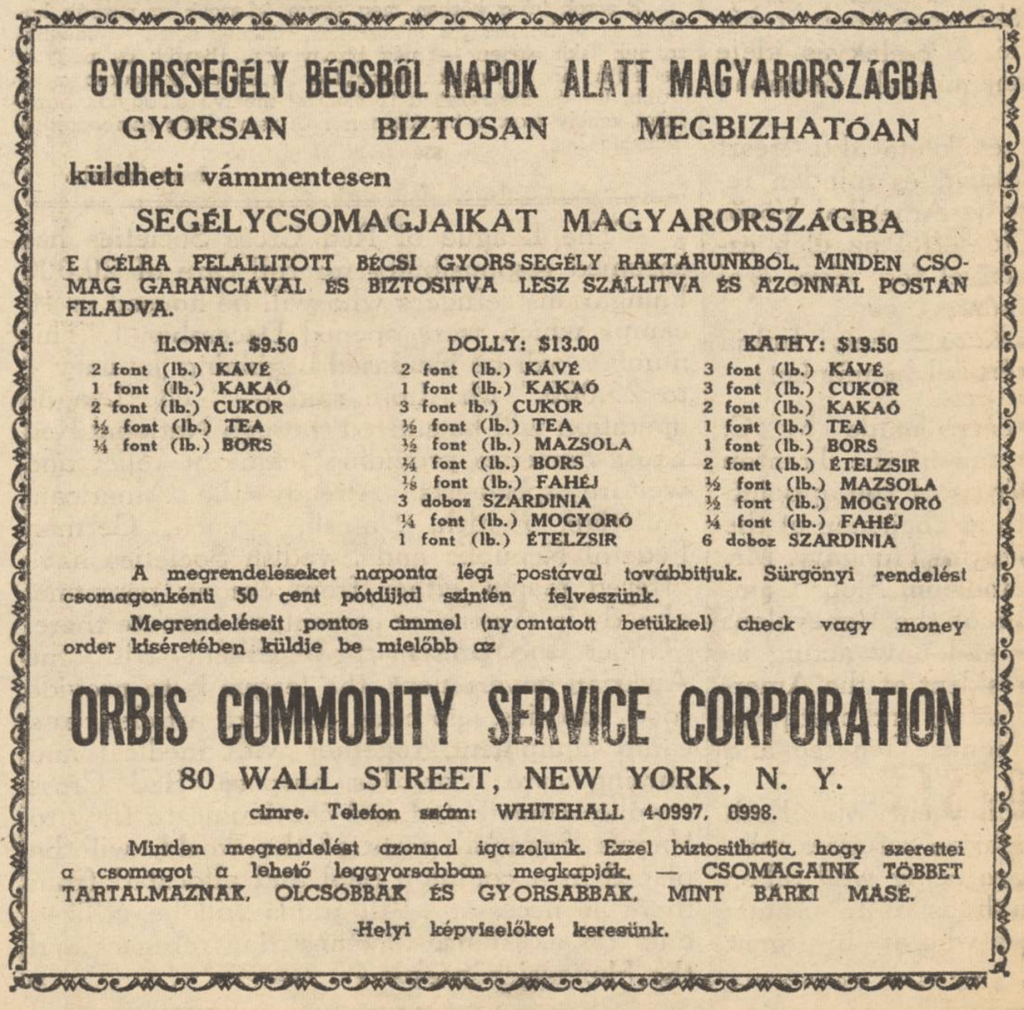
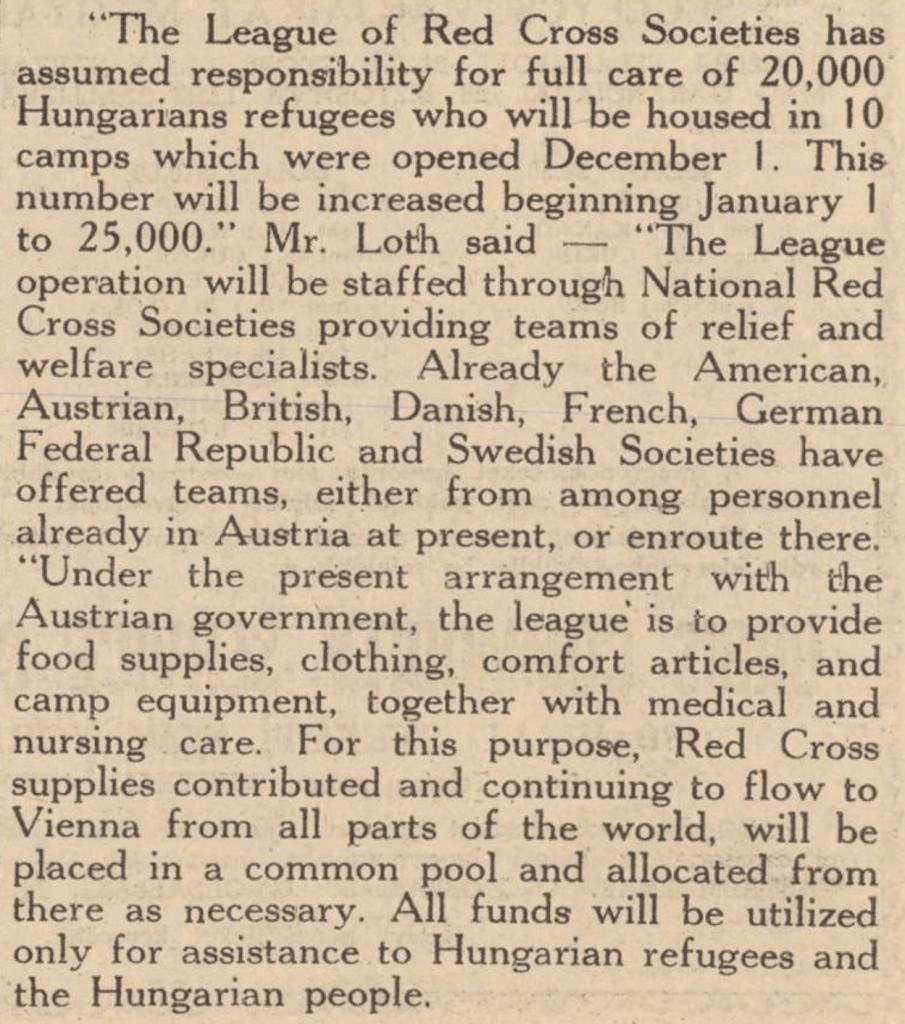
These photos encapsulate part of what we do as historians, we connect various pieces of information from the past into coherent stories. For instance, by connecting the newspaper clippings with the physical objects I can tell a story about how Hungarian-Americans participated in the projects to aid their co-nationals through monetary donations to the Red Cross, purchasing aid packages from import-export companies, writing packaging labels for River Brand Rice Mills, or translating for the Red Cross in Austria and Hungary.
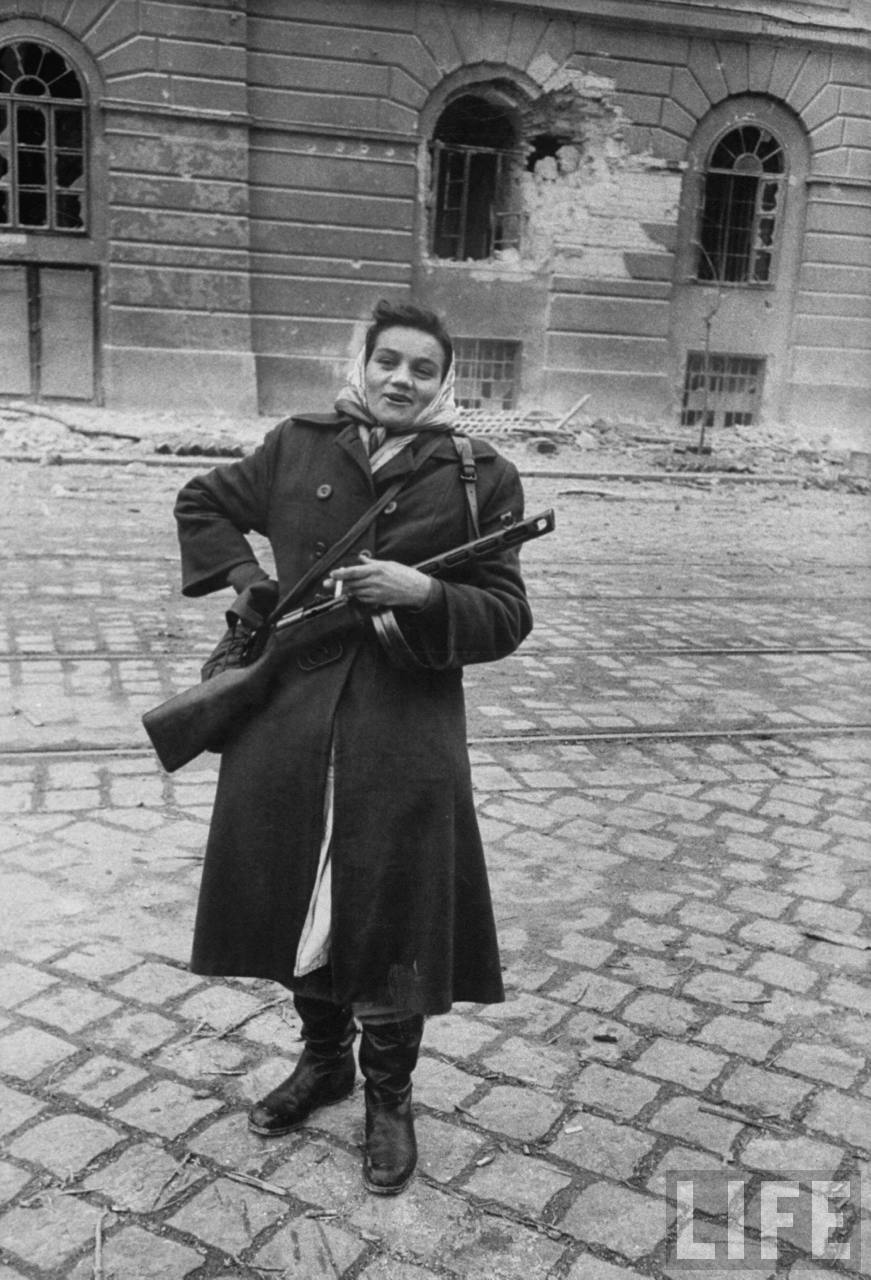
Similarly, as historians we engage with the writings of other historians. For example, earlier this week I read an article by Dr. Andrea Petö, an excellent historian of women in Hungary during the 20th Century. In the article, she tracks how public descriptions of women in the 1956 uprising is often restricted to that of victim (martyr, widow, or mother) or as non-combatants, like nurses. (If you want to read the article it is available here). Yet we know this is an incomplete picture, as clearly demonstrated by this photograph.
Where this matters though can be quite subtle. In the Sadovy exhibit, this showed up in an unexpected way. There were several photos with women, including a powerful series where one woman identifies the body of her husband killed in the street fighting. But then there was this photo and its caption.
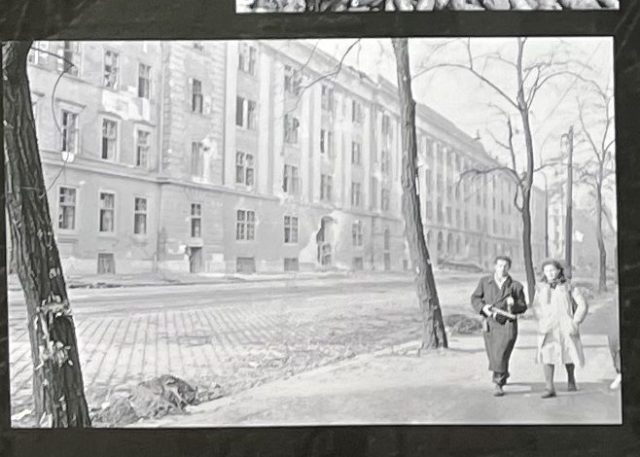
In both the English and Hungarian versions of this caption there is no mention of the woman who is clearly present. Petö would argue that this omission is because the role of the woman is ambiguous and potentially challenging the acceptable portrayal of women. If you compare her to that of the woman above, the primary difference is that in this picture the woman is not openly carrying a weapon. Instead, she is simply not mentioned in the caption which is odd. The Hungarian National Museum is a highly reputable institution, yet here it literally erased a woman, and it is difficult to find an explanation other than Petö’s.
Again, as historians we take multiple pieces of evidence and place them together to understand the past. Yet, when that evidence contains information that does not fit our understanding a good, professional historian interrogates the sources and the narratives until they can be reconciled. That is what a professional historian means by “revision,” a revised understanding of the sources available.
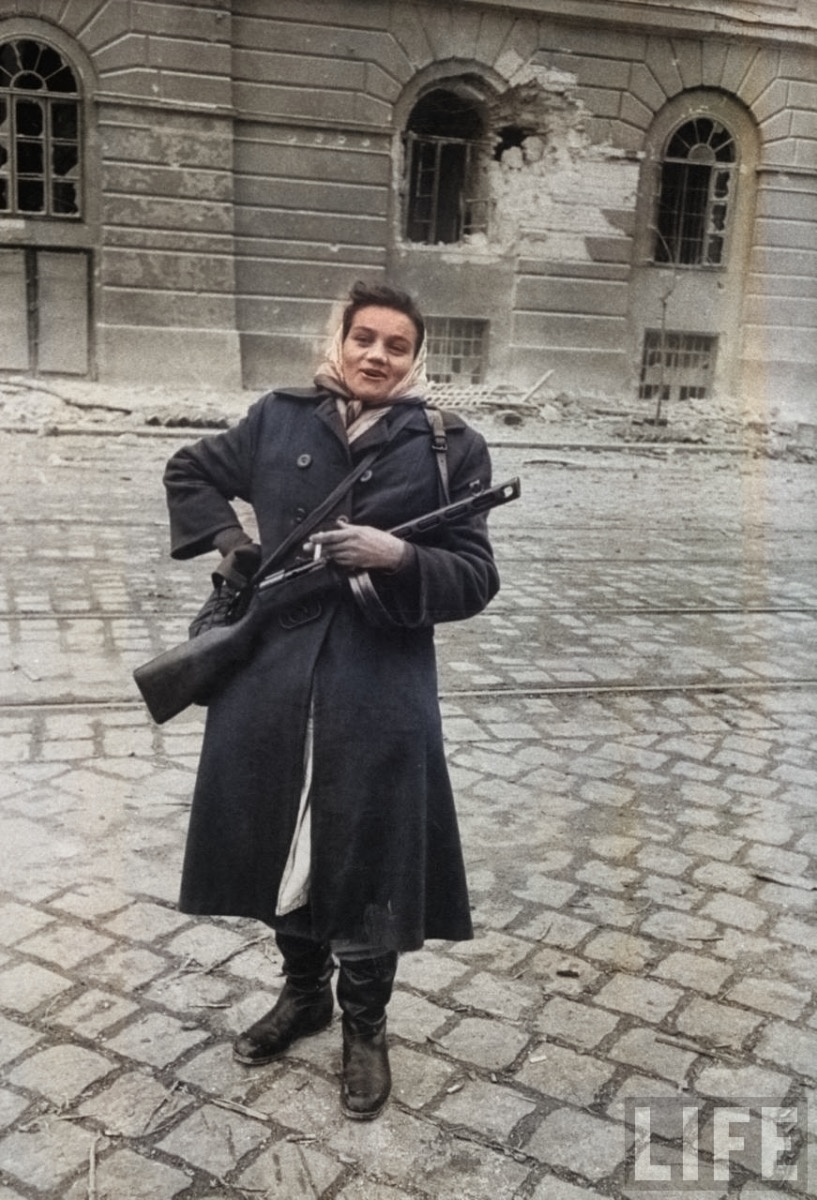
Bonus: After participating in a conference about media, technology, and AI-tools it seemed appropriate to tryout an AI-driven photo colorizer. Enjoy!
- “YEAR XXXVIII. ÉVFOLYAM — NO. 02 SZAM,” Jersey Hiradó, January 10, 1957, American Hungarian Foundation Digital Archive. ↩︎
- “YEAR XXXVII. ÉVFOLYAM — NO. 50 SZAM,” Jersey Hiradó, December 13, 1956, American Hungarian Foundation Digital Archive. ↩︎
- “YEAR XXXVII. ÉVFOLYAM — NO. 50 SZAM,” Jersey Hiradó, December 13, 1956, American Hungarian Foundation Digital Archive. ↩︎
- Michael Rougier, Woman Hungarian Freedom Fighter during Revolution against Soviet-Backed Regime. Budapest, Hungary., November 1956, photograph, 871 x 1280 pixels (12.1 x 17.8 inches), November 1956, LIFE photo archive hosted by Google, https://images.google.com/hosted/life/ab23c8b113f01204.html. ↩︎
 Patrick C. Leech