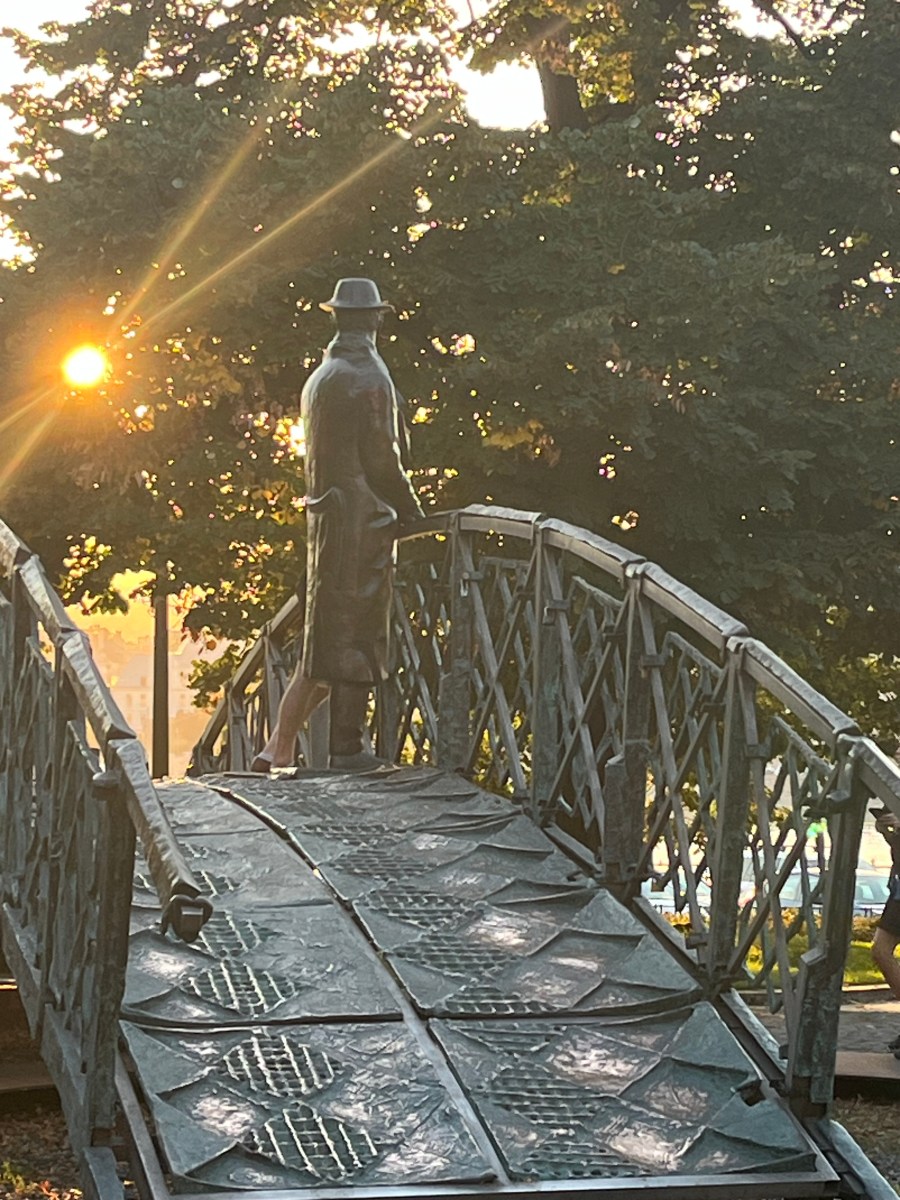
Earlier this week my language tutor asked me this question: “Milyen politikus volt Nagy Imre?” (What kind of politician was Imre Nagy?). The answer is complicated and not just because my Hungarian is not at the level needed to answer that question. Aside from being a good question for me to practice with, it is also a timely question.
Part of the reason it is a difficult question is one must first answer which Imre Nagy? Nagy became a communist after being captured by the Russian Army during World War I. He formally joined the Communist Party and was trained in subversive actions by the Cheka, one of the earliest security services of Bolshevik era, before being sent back to Hungary in 1921 to rebuild the Communist Party in the wake of the disastrous and short-lived communist revolution in Hungary. He actively worked within the underground communist organizations of Hungary during the 1920s and was arrested at least once. In the 1930s, he returned to the Soviet Union, gained citizenship, and served in various agricultural positions. He also actively informed Soviet security services, even after being expelled from the party in 1936. Nagy returned to Hungary after World War II and served as Agricultural Minister in the first Communist government. As a “Muscovite”—a term used to describe communist leaders with training and experiences in the Soviet Union—Nagy survived the Stalinist purges of 1949 which resulted in the execution of “local” leaders like László Rajk. In 1951, Nagy and the rest of the politburo signed the warrant that led to the arrest of János Kádár who was sentenced to life imprisonment. From this a clear pattern emerges: Nagy was a committed communist, who specialized in agricultural production, actively colluded with security services, and managed to survive the various Stalinist purges.
Following the death of Stalin in 1953, the power struggles within the Kremlin created ripples in Budapest. As a Stalin protégé, Mátyás Rákosi was pushed into retirement and in line with Soviet emphasis on expanded agricultural production, Nagy was elevated to Chairman of the Council of Ministers; a post he held until 1955, when he was ousted and expelled from the party. Nagy enjoyed broad public support largely due to the end of the purges and their secondary disruptions.
In 1956, Nikita Khrushchev sought to secure his position be denouncing Stalinist “excesses” which created processes for rehabilitating various purged leaders throughout the communist world. In Hungary, this affected the late László Rajk and other leaders executed under Rákosi who were given public reburials. Nagy participated in the October 6 reburial of Rajk and was reinstated to the party on October 13. Moreover, the student demonstrations of October 23 included a list of demands like the removal of Soviet troops from Hungary and the return of a Nagy premiership. The student demonstrations successfully pressured the government to bring Nagy into the Council of Ministers and he was pushed into delivering a speech to crowds around the Parliament building. While the speech failed to disperse the crowd, the heavy-handed response of the hated secret police escalted the demonstrations into a revolt. By morning, the Hungarian military units called in to restore peace had joined the protestors and Nagy was elevated to the premiership.
Between October 23 and October 30, Nagy worked to restore peace while avoiding violent confrontations between the Soviet Army and the Hungarian citizenry. He successfully negotiated a ceasefire and the withdrawal of Soviet troops from Budapest and most of Hungary by November 1. Moreover, when most of the party leadership fled to the Soviet Union, Nagy remained and formed an interim government that attempted to navigate a path between the popular demands and Soviet security concerns. As a result, many Hungarians reveled in their successful, and surprisingly peaceful, ouster of the Soviet Army.
Unfortunately, the Soviet Army launched Operation Whirlwind on November 4 and despite serious Hungarian resistance the Soviets slowly quashed the revolt and the hopes of the Hungarian people. Nagy and the interim government obtained refuge within the Yugoslavian Embassy but were betrayed on November 22 while boarding buses to evacuate to Yugoslavia. Nagy, and the others, were imprisoned in Romania until their trials in 1958. Unsurprisingly, they were convicted, executed, and buried in secret, anonymous graves. In 1989, amidst the nascent political reforms in Hungary, Nagy and his codefendants were exonerated and given public reburials. A fitting parallel to the reburial of Rajk in 1956, and an event that often marks the beginning of the end of communism in Hungary.
This brings us back to the original question: what kind of politician was Imre Nagy, and its corollary, which Nagy. The martyred Nagy is an anticommunist leader executed by the oppressive regime for attempting to create a free Hungary. This is the portrait embraced by the many in Hungary and around the world. Yet, the historical Nagy is a significantly more complicated person. He is clearly a committed communist and complicit in some of the worst atrocities of the Soviet and Hungarian communist parties. He was a reformer who sought to correct the flaws from within communist structures and not a revolutionary seeking to overthrow them. Yet, regardless of one’s political beliefs there is something appealing about an earnest politician like Nagy. As best as we can tell, Nagy genuinely believed in a socialist democracy and sought to implement that in Hungary. As such, he seems much like his martyred predecessor, Lajos Batthyány, the reform politician and first prime minister of Hungary executed by the Habsburg Army—on October 6, 1849—after voluntarily facing his trial because he believed in the justness of his actions on behalf of his country.
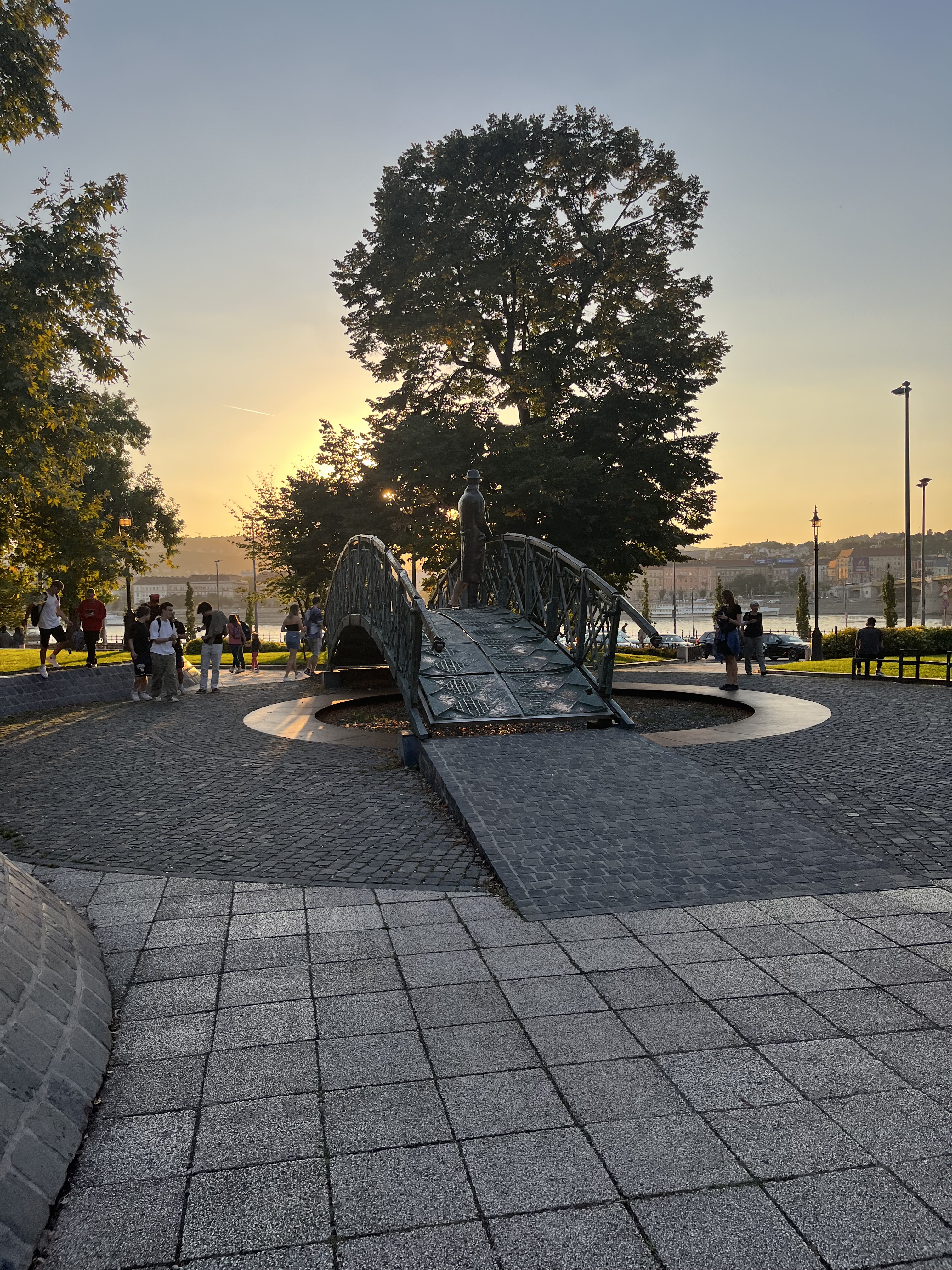
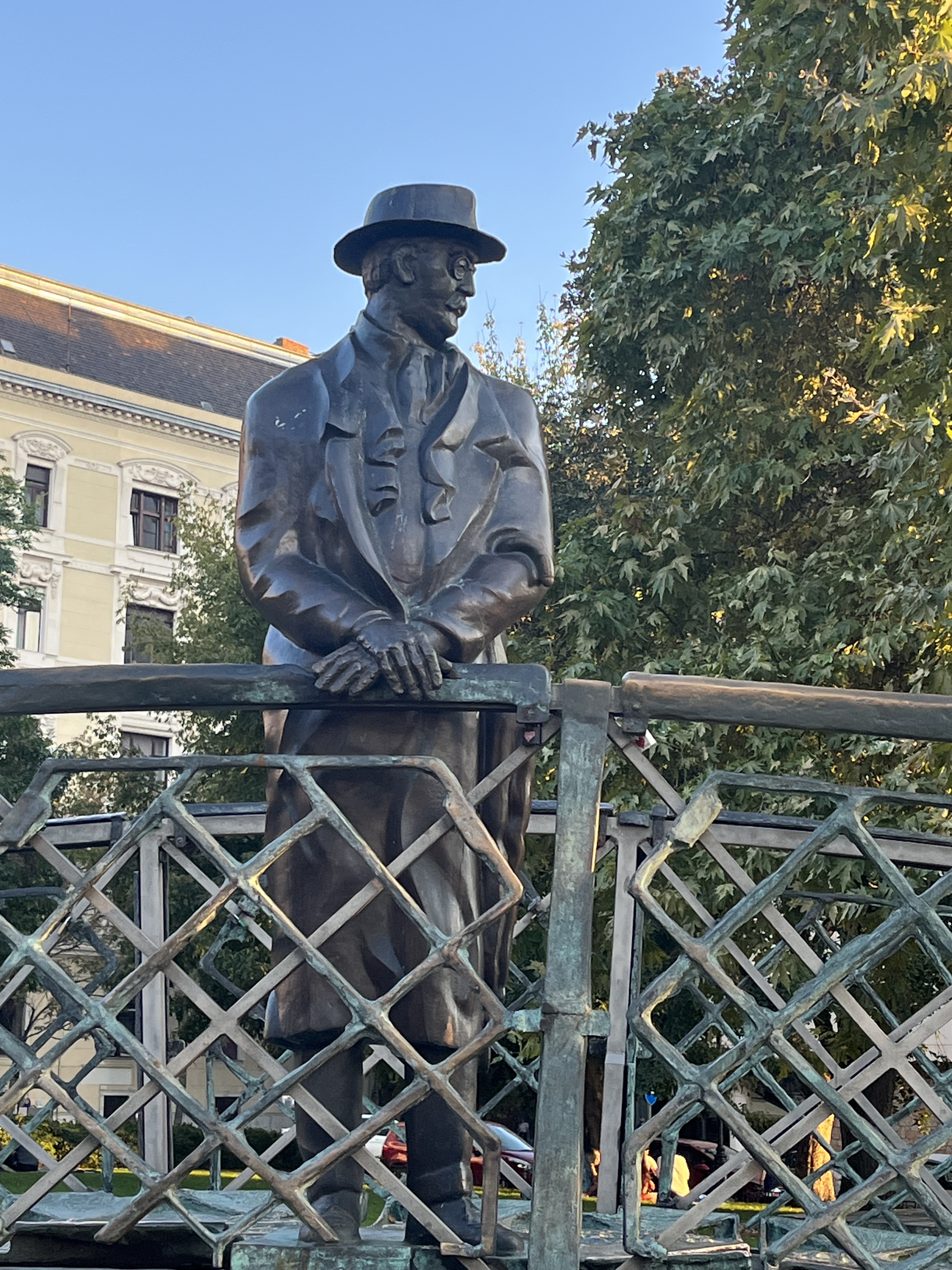
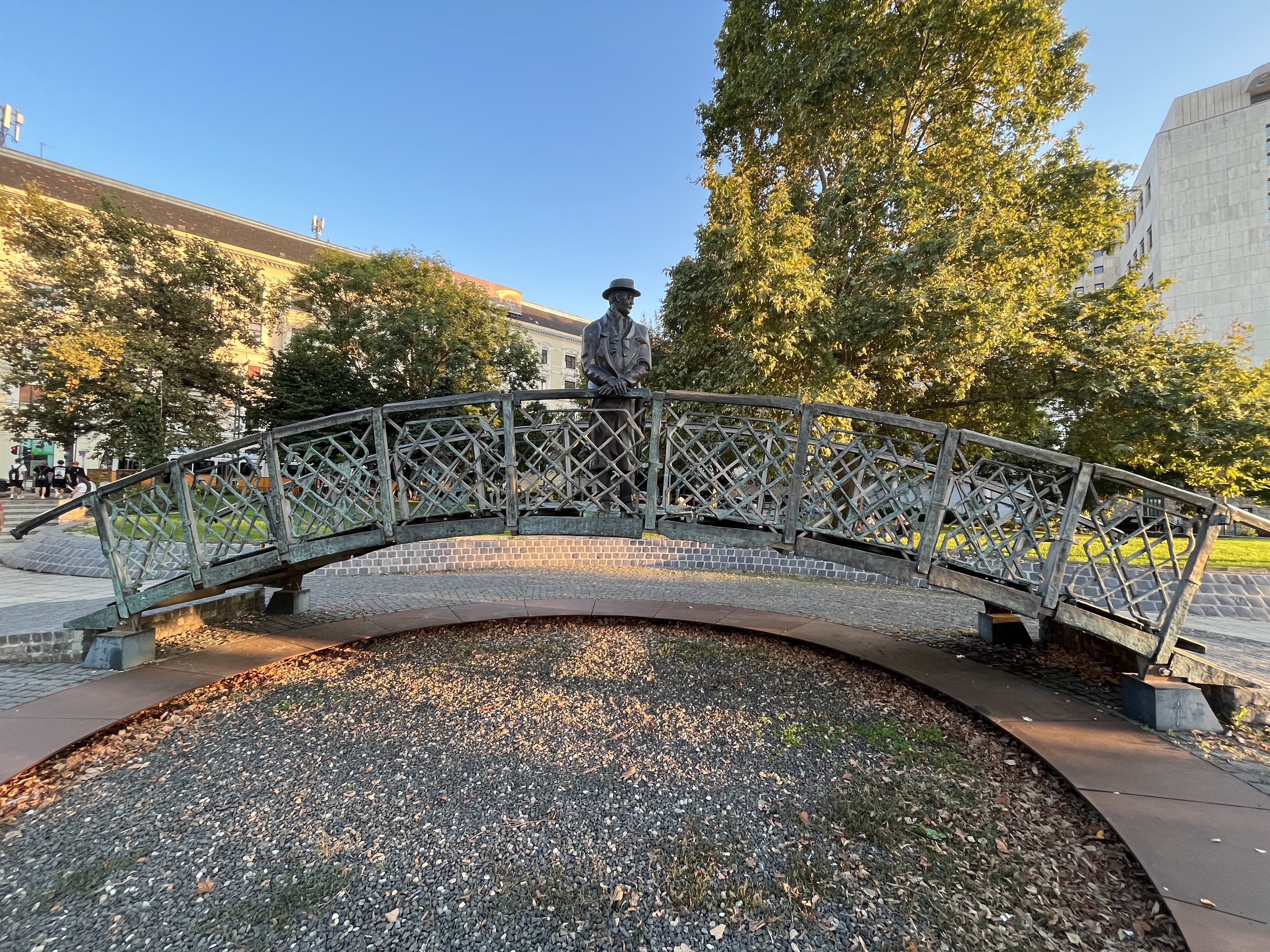
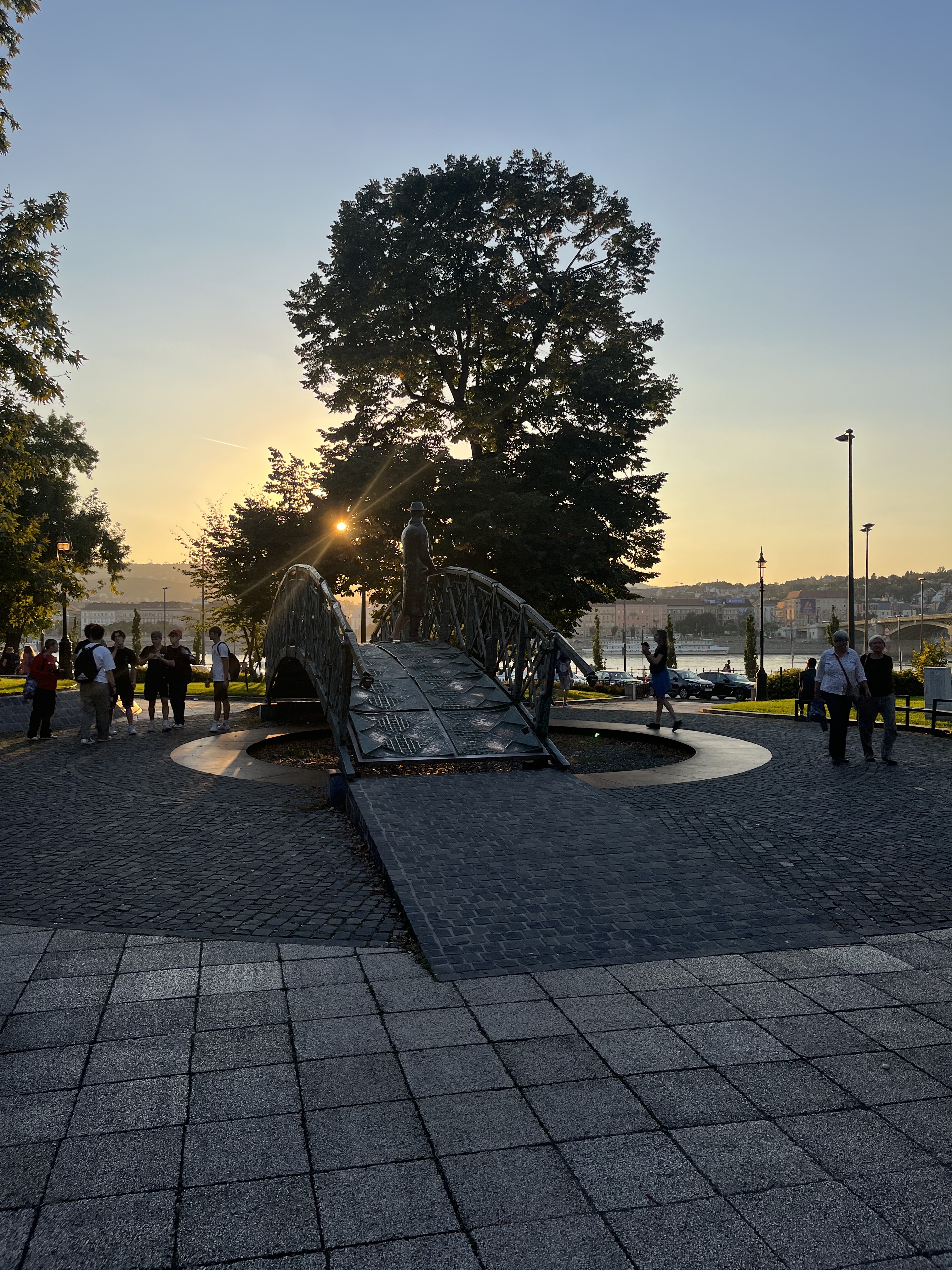
Photos of the Imre Nagy memorial, Jászai Mari tér, Budapest.


 Patrick C. Leech