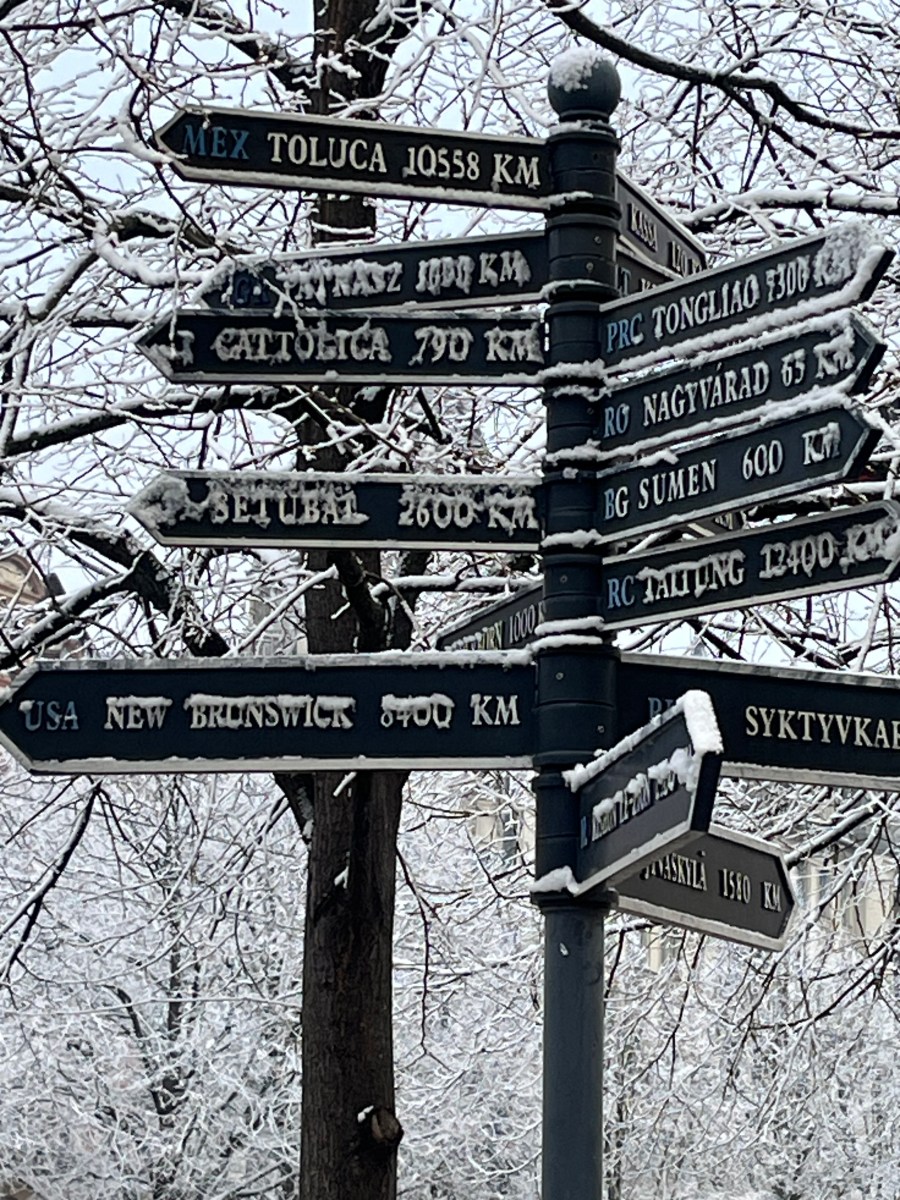
Early this week I travelled to Debrecen (in Northeastern Hungary) to present at a conference at the University of Debrecen. The conference went well, I met great scholars and received immensely helpful feedback on my research.
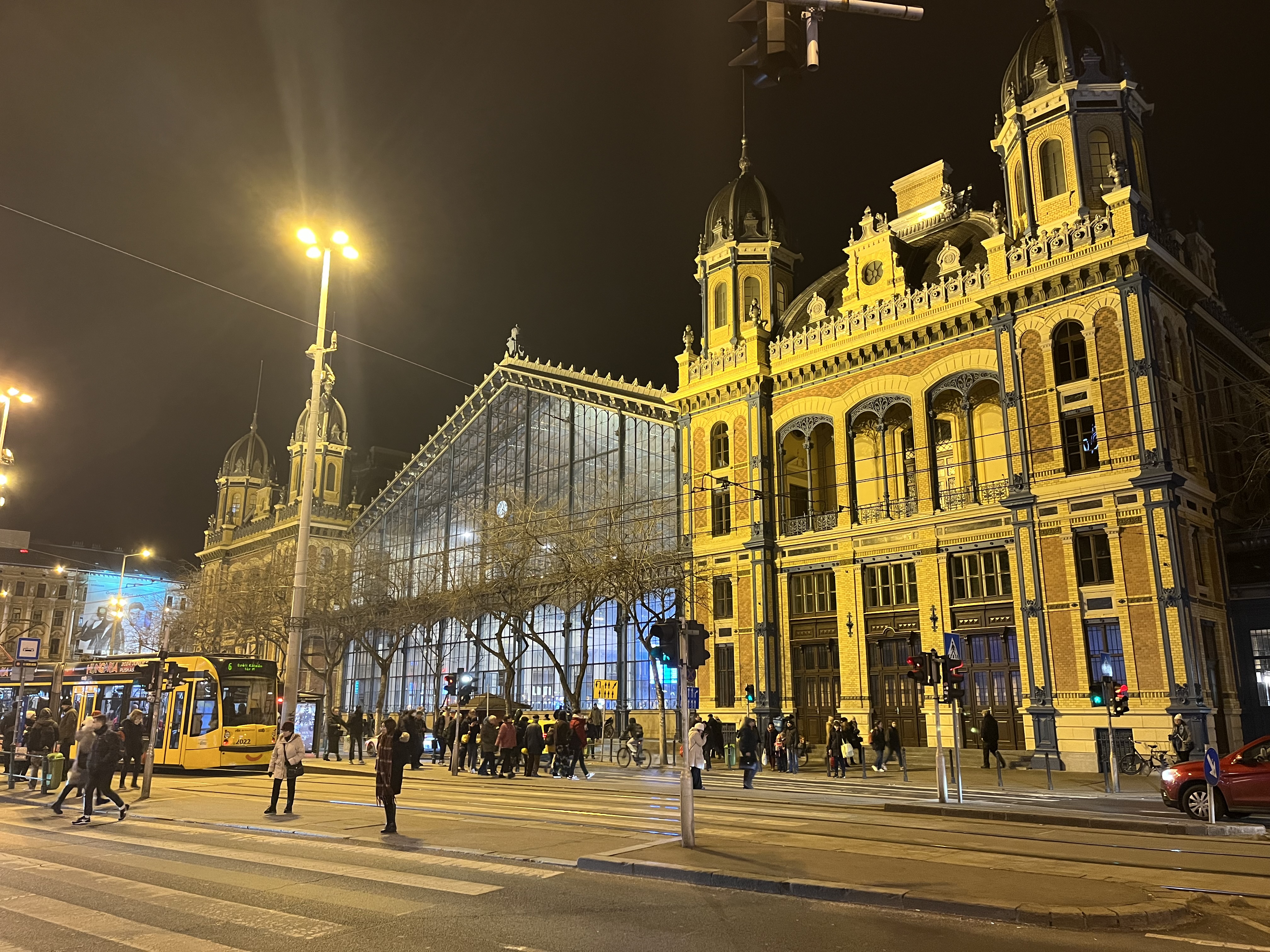
My trip began at the Nyugati Pályaudvar (Western Train Station) in Budapest. It is a striking structure build by Gustave Eiffel in 1877 with a beautiful iron and glass enclosure. It also houses the “World’s Most Elegant” McDonald’s, due to that company’s investment renovating the building in the 1980s.
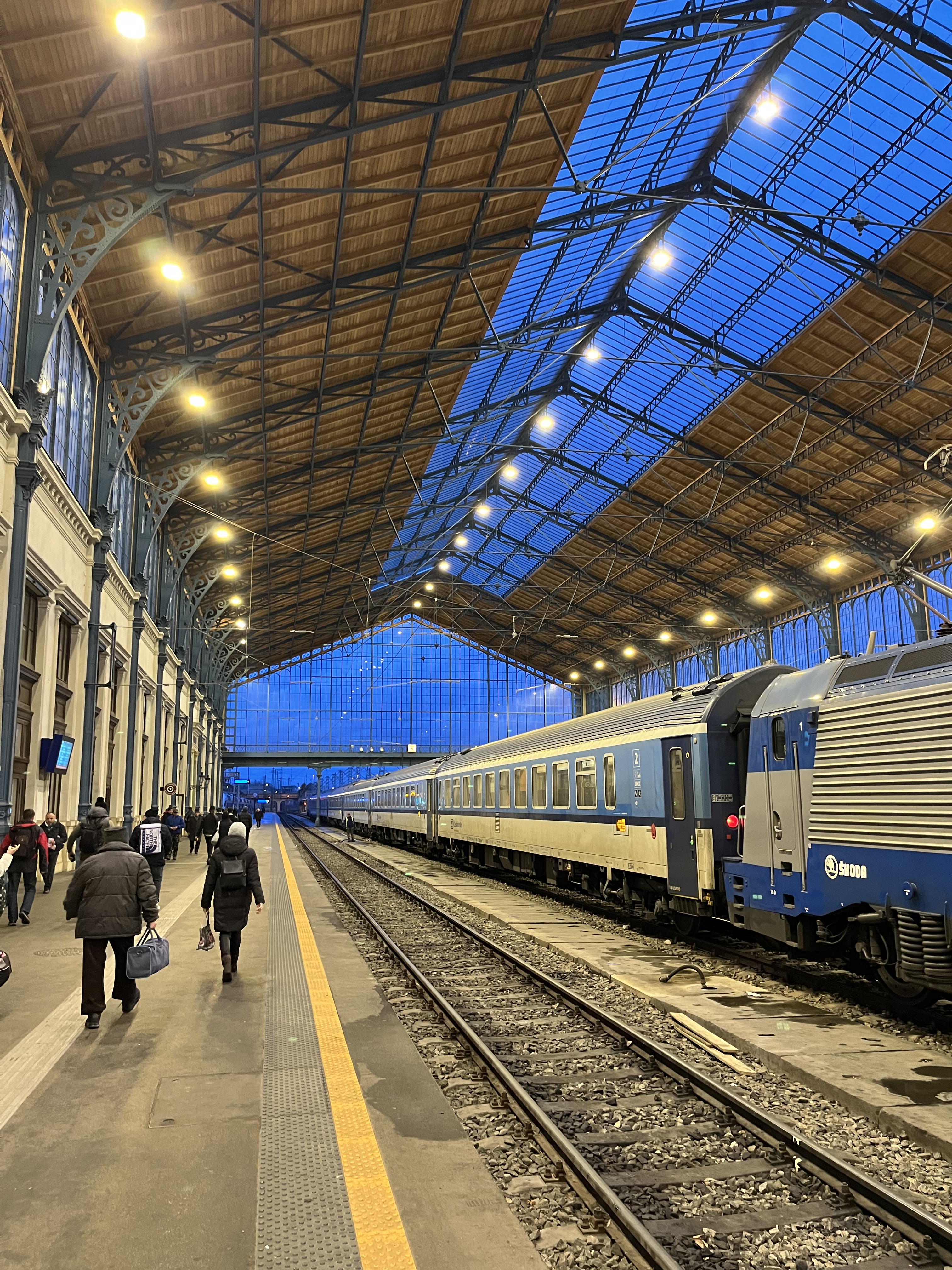

Once out of Budapest, the landscape whitened as a thin layer of snow blanketed the countryside. While quite lovely from my seat in the train, it proved impossible to capture to effect on camera. The trip took two and a half hours, and a small flurry of snow arrived in Debrecen with me.
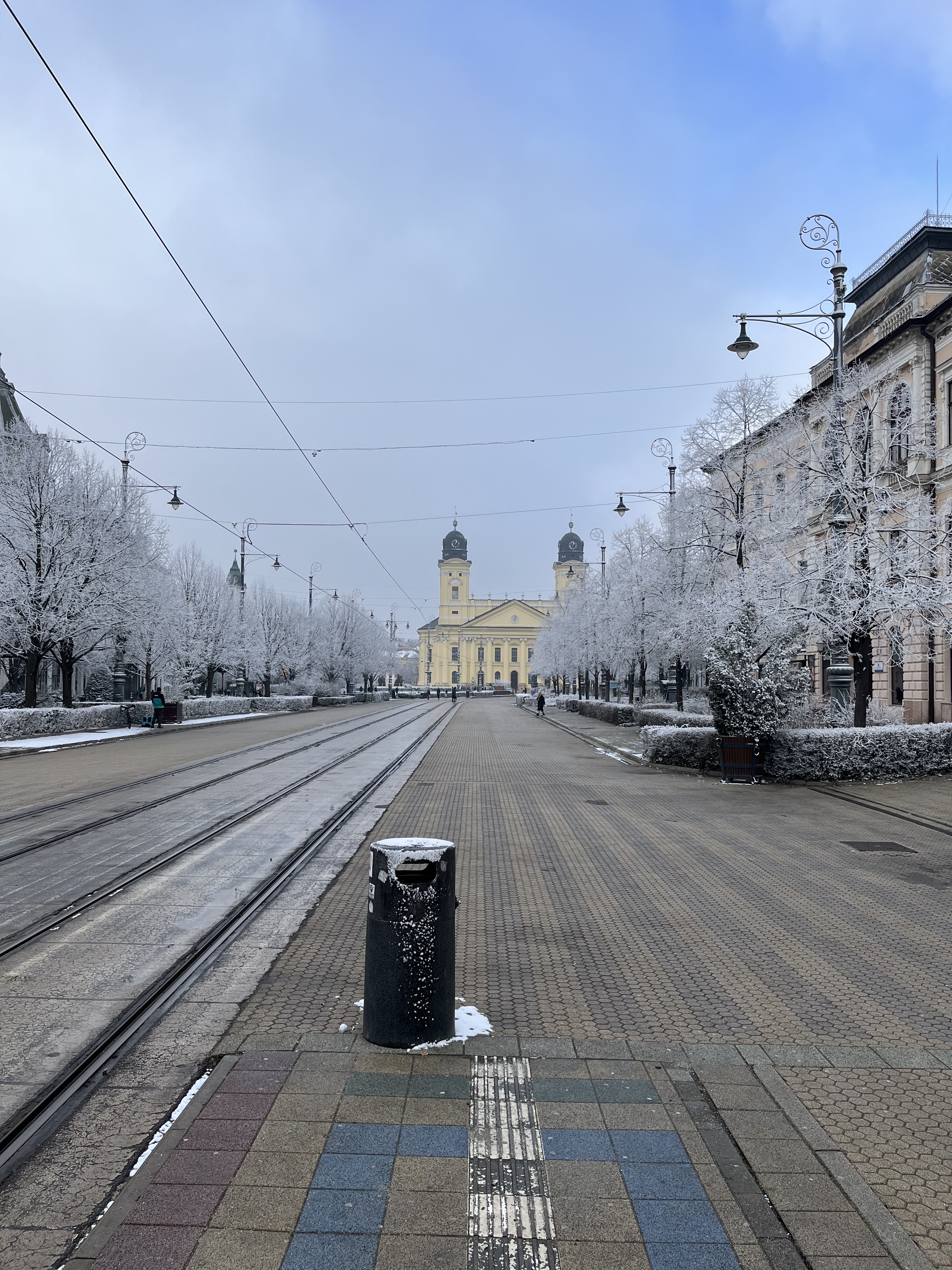
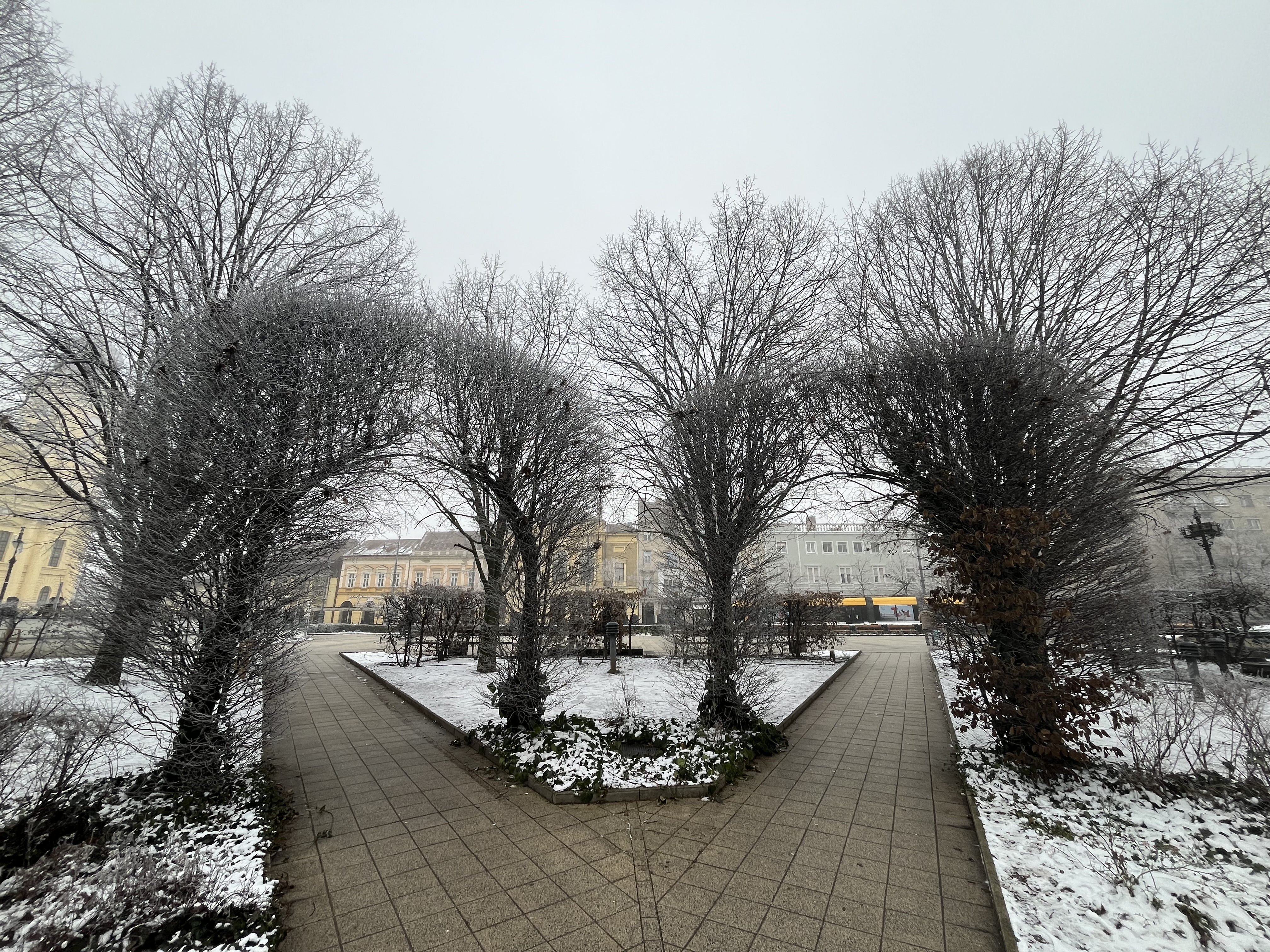
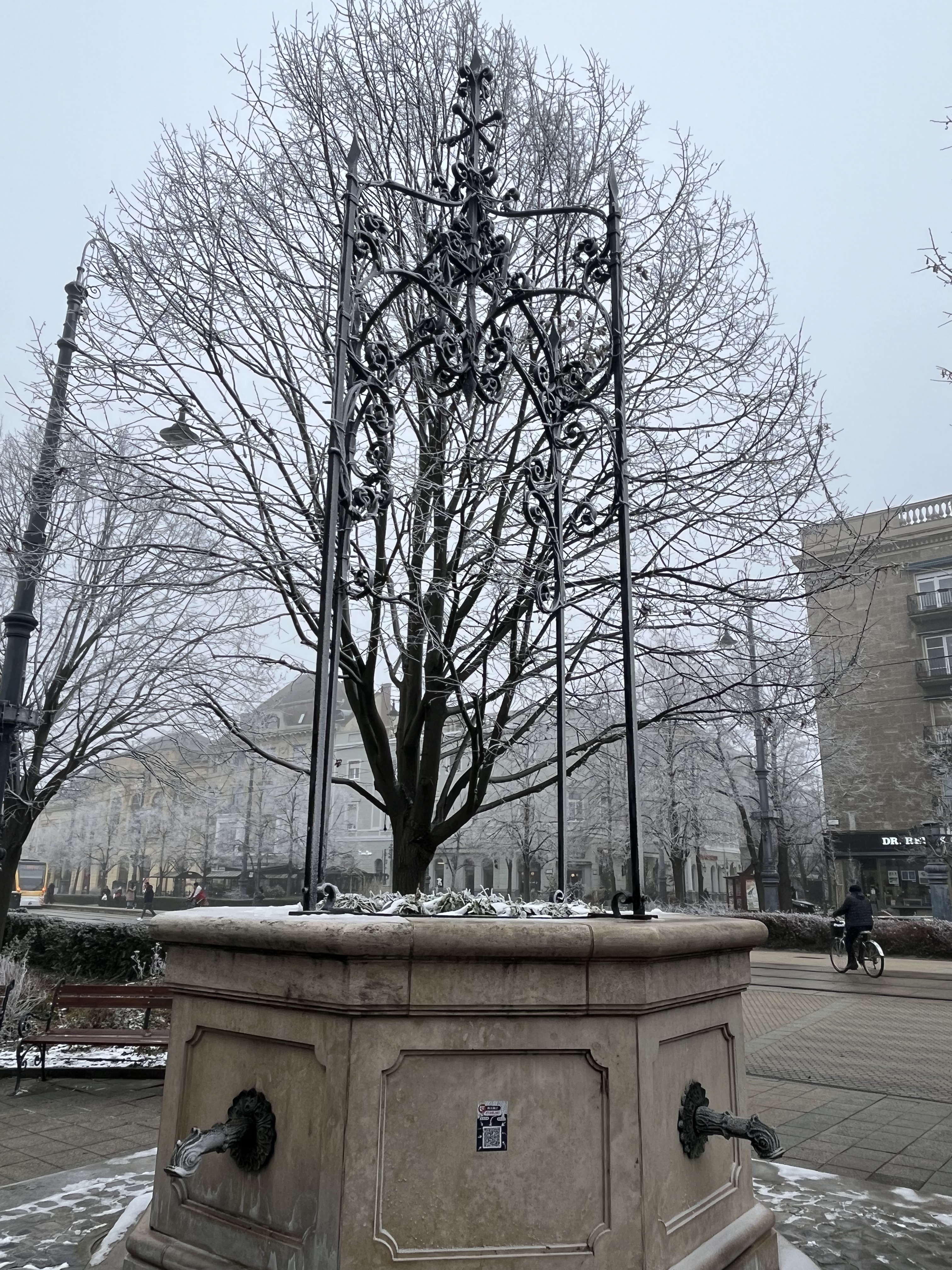
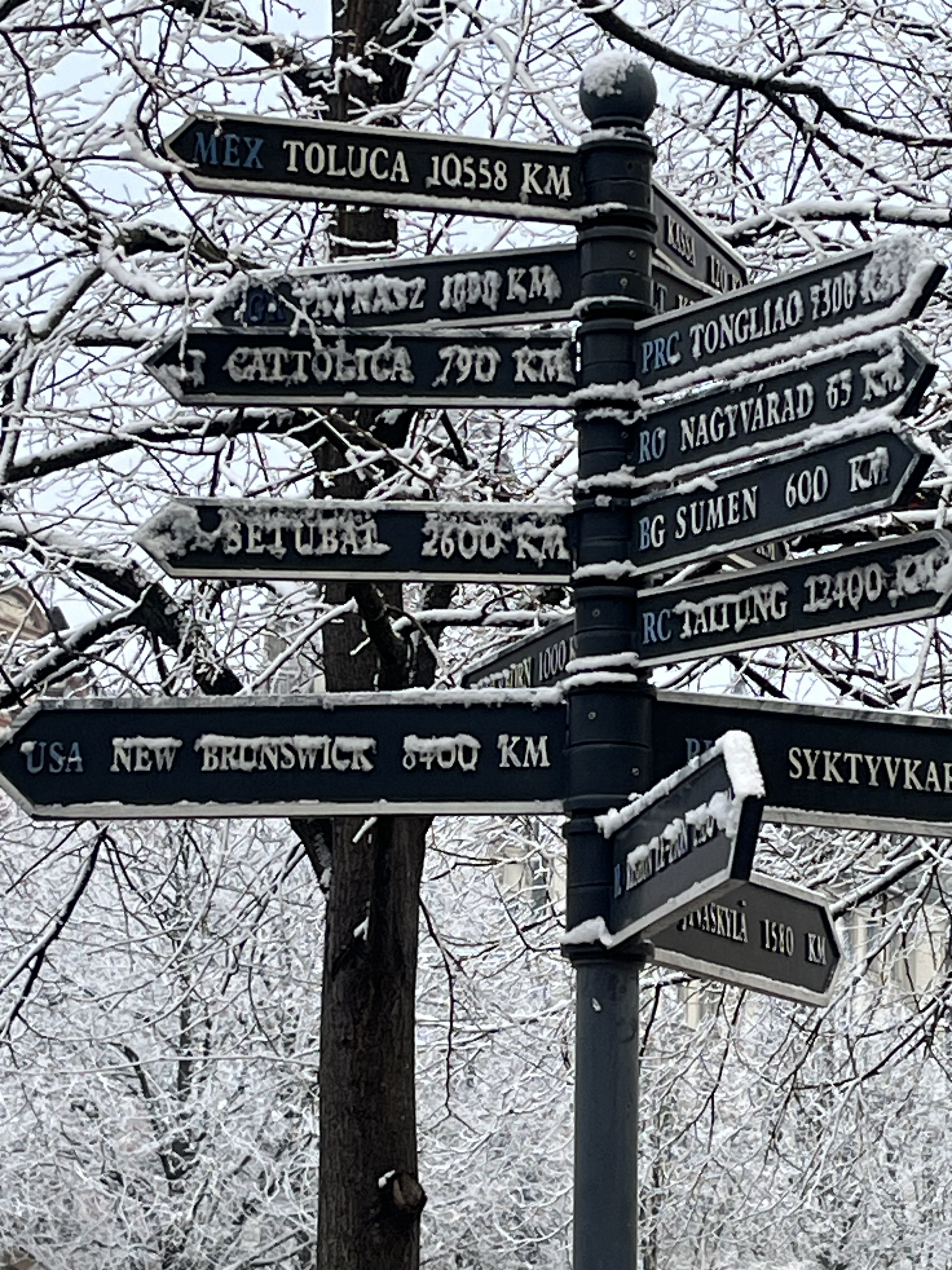
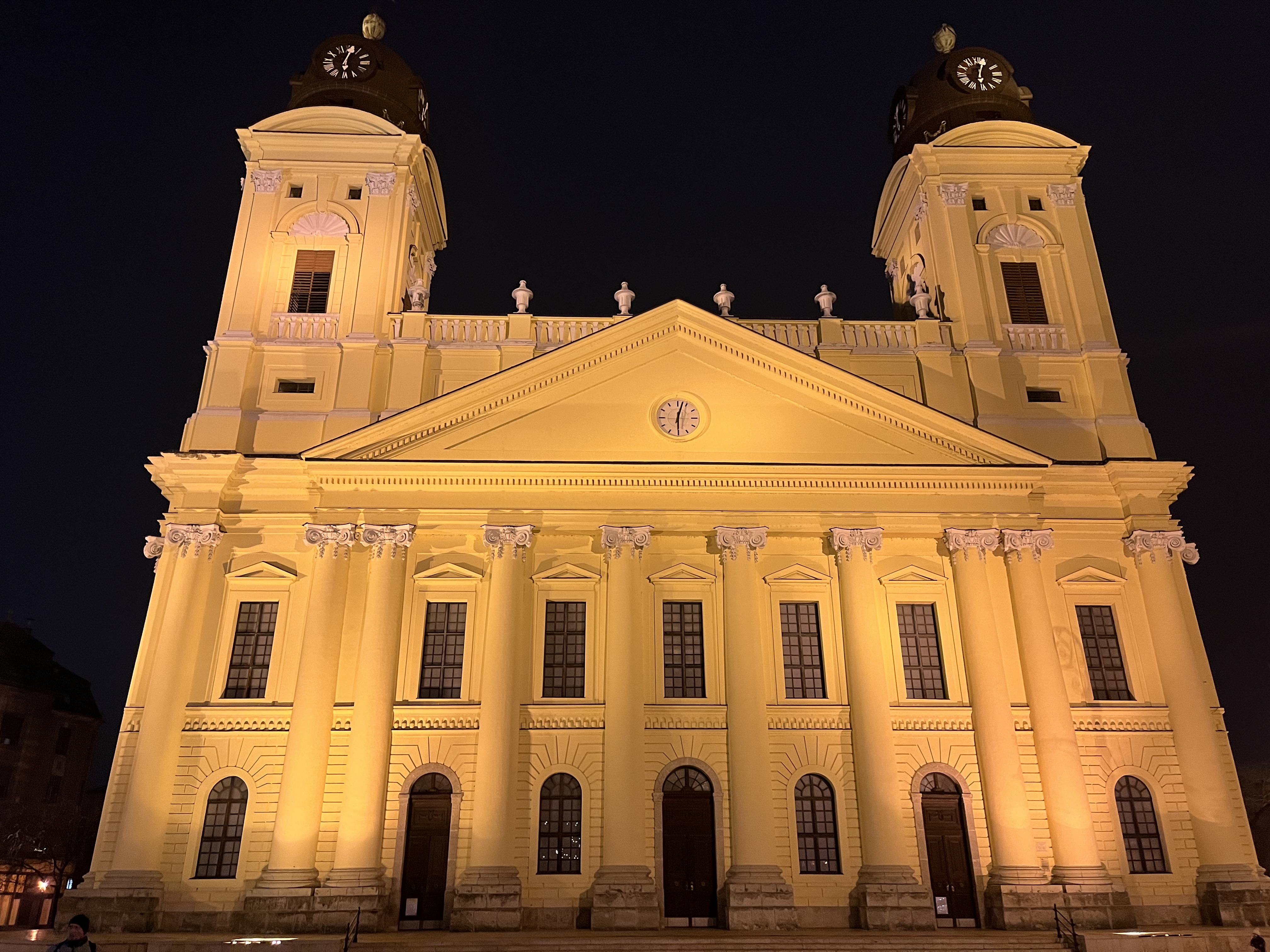
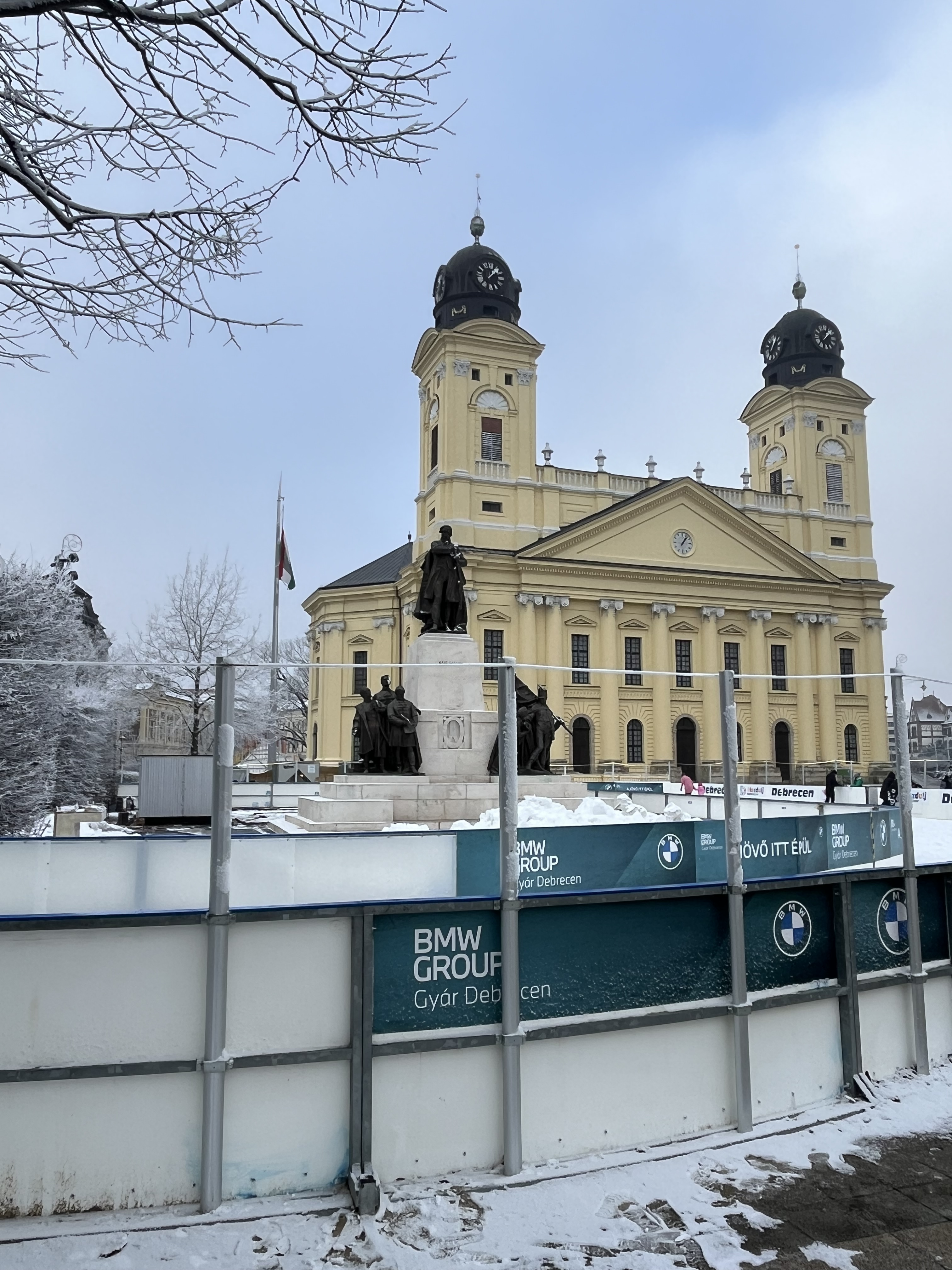
Debrecen is the homeland of Hungarian Protestantism, particularly the Hungarian Reformed Church. As such, the city is dominated by the Debreceni Református Nagytemplom (Great Reformed Church of Debrecen). The city, the second largest in Hungary, is also a historical political capital and long-standing cultural center of the Hungarian people. Between the conference and the weather, I did not spend much time exploring the city, but I plan to do so this spring and will write more about the city itself then.
In walking around the city, I came upon an enigmatic statue that captured my attention. Standing to the side of the square is a lovely statue of a family, yet there is little about the statue to explain why it exists and in that location. So of course, I did a bit of research. The statue is referred to as the debreceni család (Family of Debrecen) and created by Pál Pátzay in 1967. Oddly, this work did not appear in either the English or Hungarian Wikipedia entries about Pátzay, despite being prominently displayed in a large city.
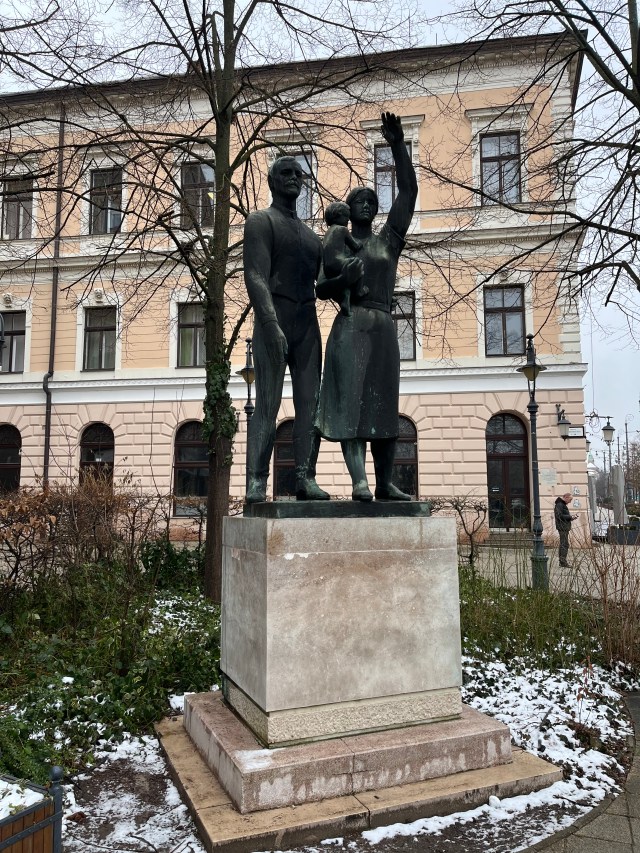

And then I found this image. Two things immediately stood out to me. One, the statue is now on a shorter base and in a less prominent location off to the side of the square. Two, the words are missing from the current display.
The only word discernable in the photograph is “felszabadulását” along with a date inscription of “1944-1967.” The word felszabadulását translate to “the liberation” and is clearly part of a larger phrase. The Red Army arrived in Debrecen in 1944 and began its occupation of Nazi-allied Hungary, what is known in Soviet parlance as “the liberation.” Digging a bit deeper I found another recent photograph that described the statue’s relocation and noted the lower portion of the base was removed which included the inscription “Debrecen népe jövendőjével köszönti felszabadulását!” (The people of Debrecen greet their future with its liberation!).
As with Memento Park this is a socialist era statue reinterpreted after the political transition. In this case, the explicitly propagandistic elements (inscriptions, height, placement) were changed. Ironically, my first reaction to the statue was that the family was bidding farewell which seems quite appropriate given the circumstances.
 Patrick C. Leech