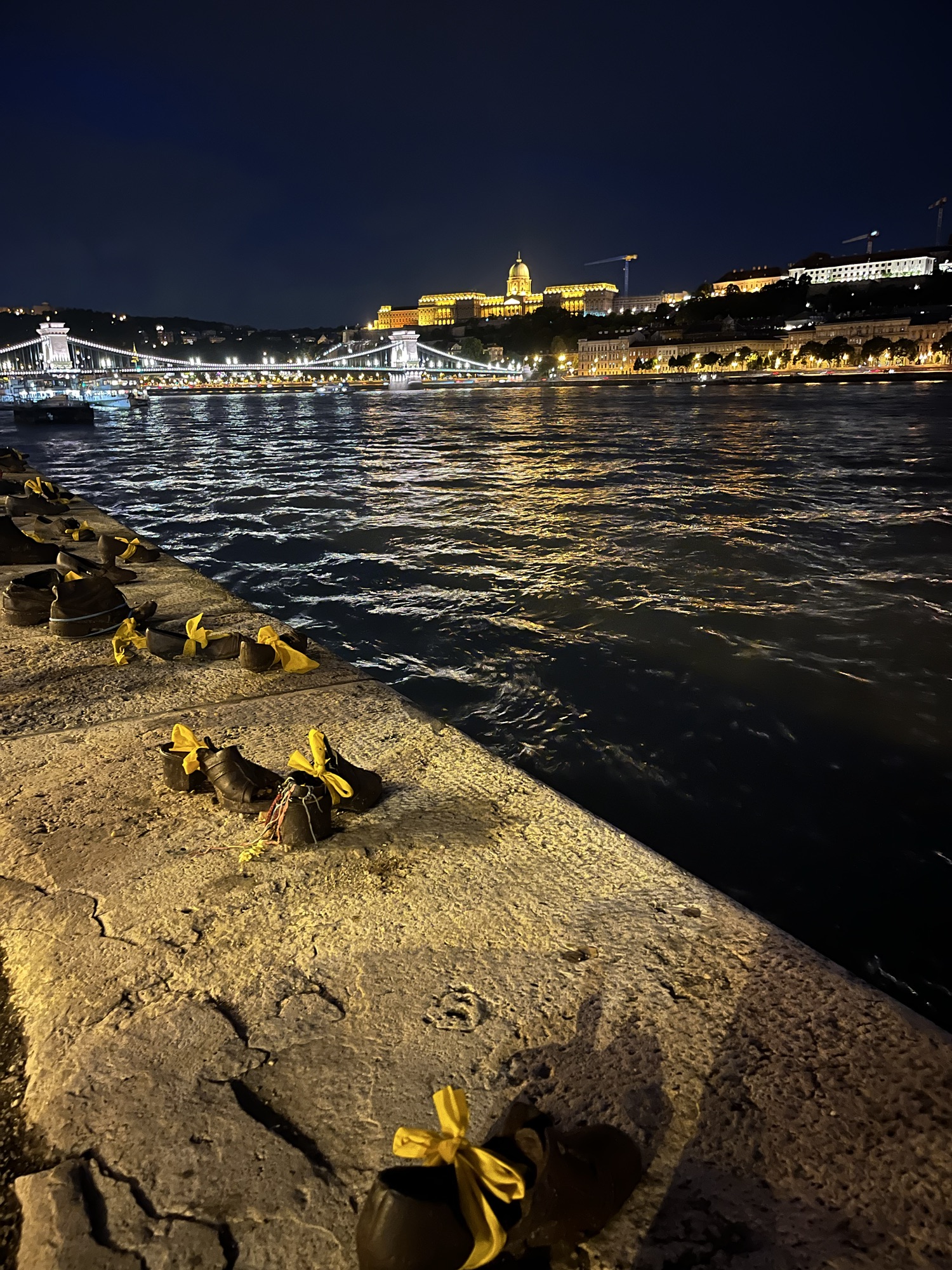
As my time in Budapest comes to an end, I find myself returning to some the places with special meaning, one of which is the “Shoes of the Danube Bank” Memorial. I find this simple memorial quite moving, and despite the inhumanity of its historical antecedents there is something deeply human about the place.



Along the Danube there a various memorializations of significant people; some are statues, others are plaques, and even the streets themselves honor the “great and the good” of Hungary. The majority are political leaders, often men, but not always. Just downriver of the “Shoes” is Jane Haining rakpart, a woman who proves the exceptions.
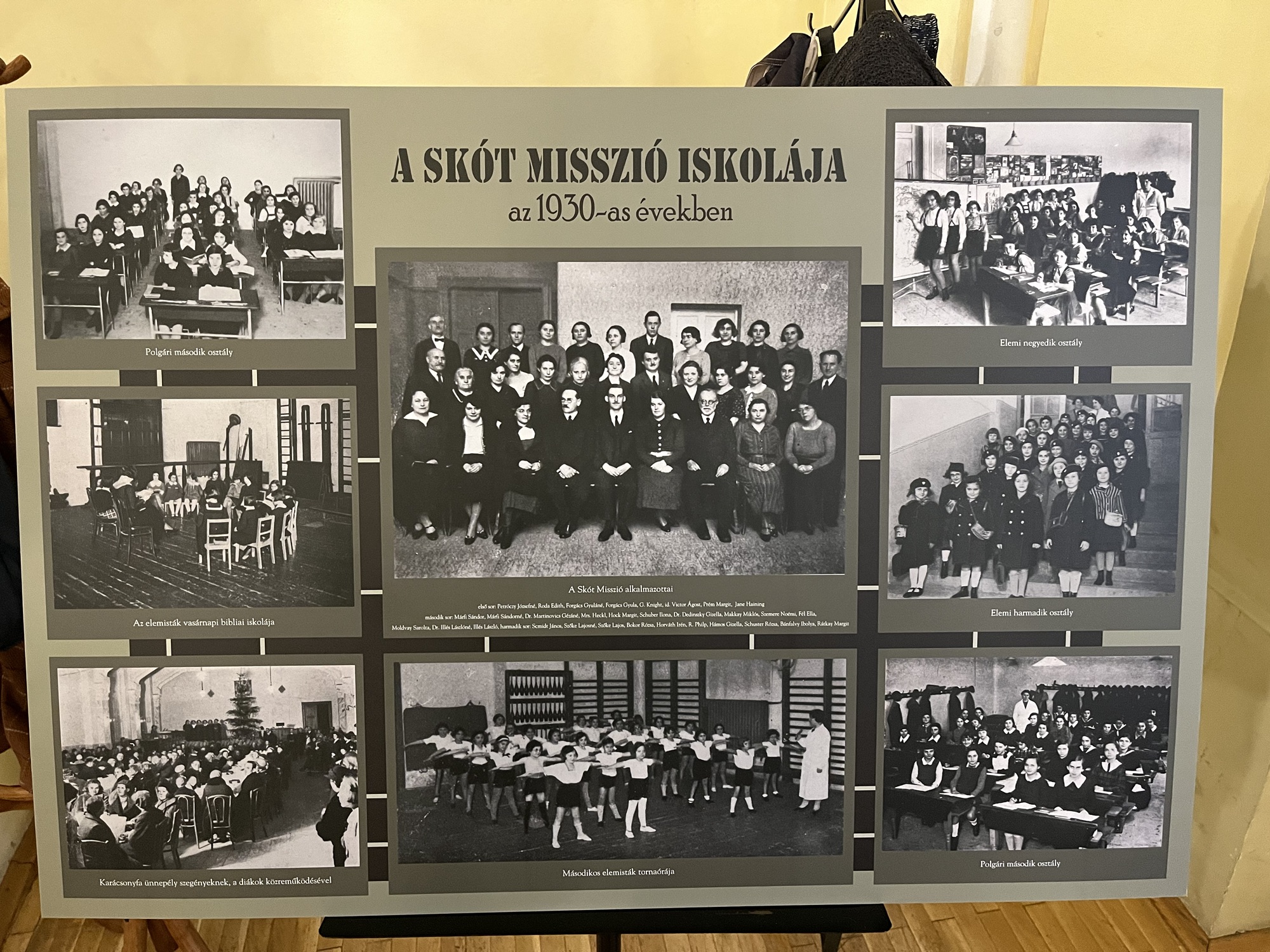
From 1932-1944, Haining was a Scottish teacher and missionary working at a school for girls in Budapest operated by the Jewish mission committee of the Church of Scotland. The primary goal of the school was to educate women in preparation for a Christian life, including the numerous Jewish girls. As such, Haining taught the schools nearly four hundred students as well as tending to the nearly forty student boarders.
Haining worked alongside Margit Prém, the Hungarian headmistress of the school. Yet that work became increasingly difficult with the outbreak of war on the European continent. Both women were abroad in September 1939 and voluntarily returned to Hungary to care for their students. The work of the mission also expanded as Jewish refugees fled into Hungary further straining its scant resources. Haining and Prém labored to stretch their material good while continuing to educate their girls.
With the Nazi occupation of Hungary in March 1944, caring for their students and others in the Jewish community became nearly impossible. Furthermore, it aroused suspicion of the authorities who arrested Haining in late April on charges related to the work she did with the Jewish community and with British Prisoners of War, plus fabricated accusations of illegal political activities. After a few weeks of imprisonment and interrogation, Haining was among the over 500,000 people deported from Hungary to the death camps like Auschwitz and Bergen-Belsen. Haining died in July 1944 at Auschwitz. The death certificate delivered to the Church of Scotland indicated she died of illness in the camp hospital though this assertion has been contested. Less than a month later, Margit Prém was also dead.
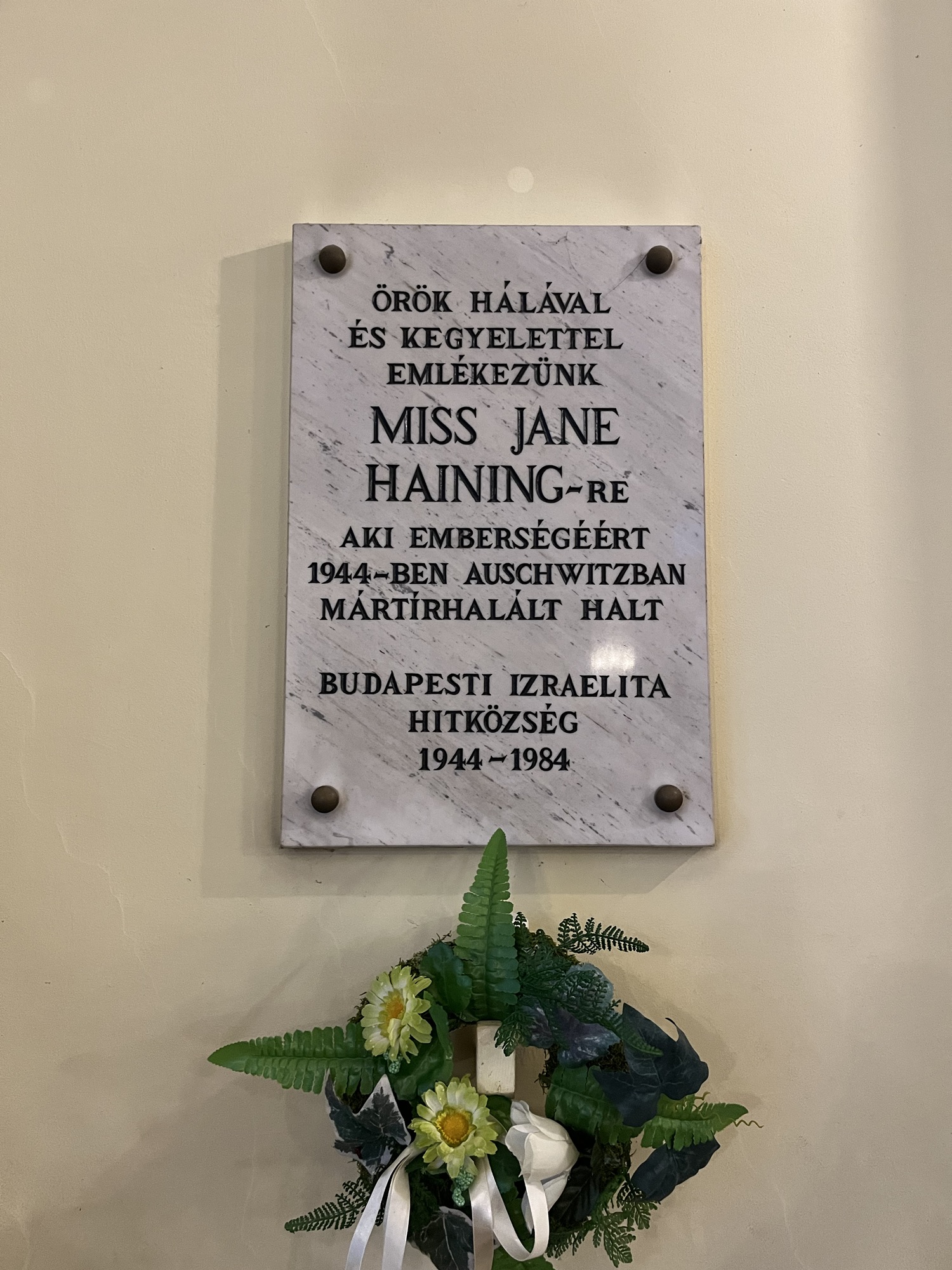
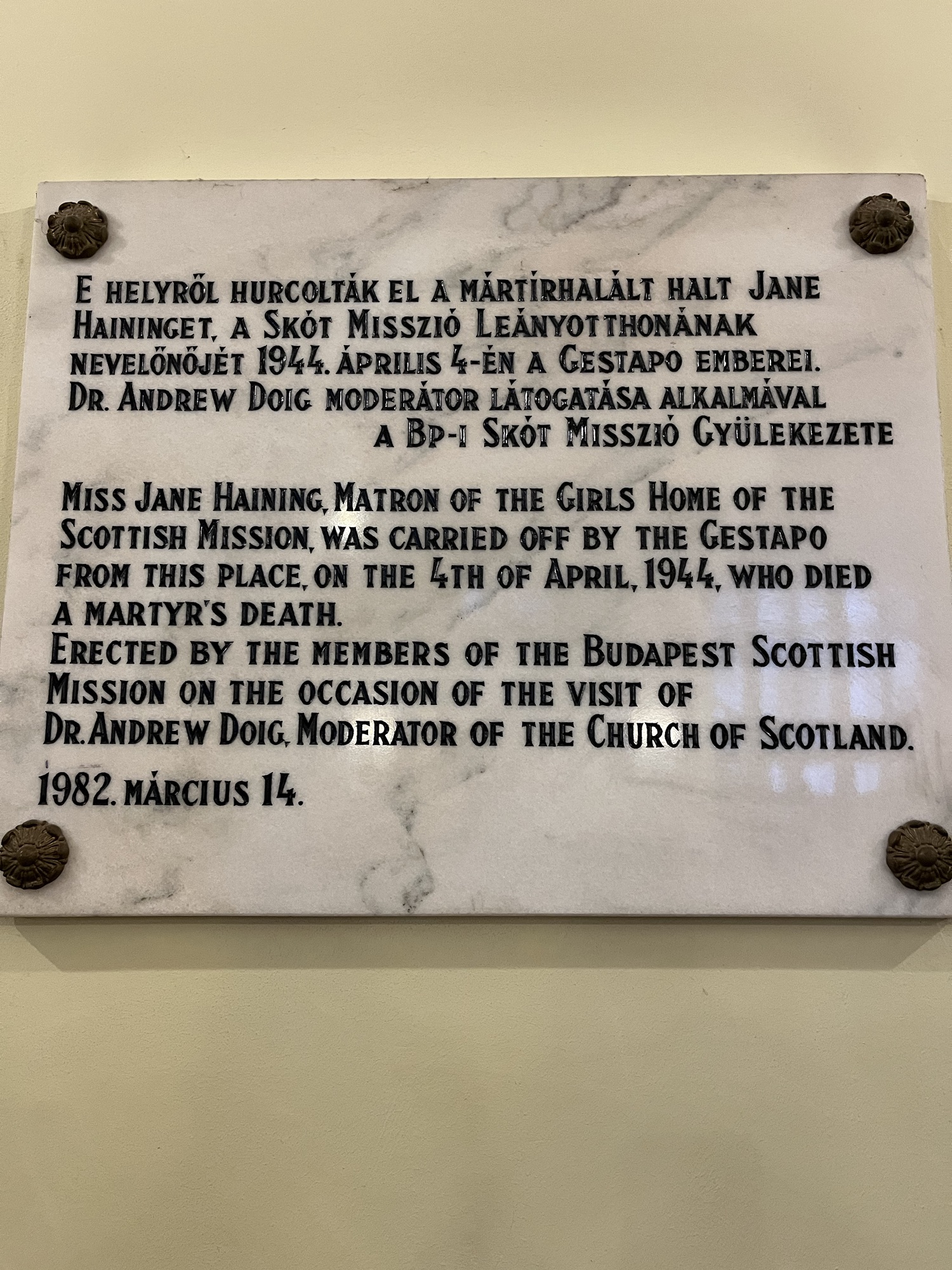
Haining is considered a martyr by the Church of Scotland and the Reformed Church of Hungary and honored as “Righteous Among the Nations” by Yad Vashem. As such, her story is hardly untold even though it may remain unknown to many. I first learned her story when I began attending services at the same Scottish mission church, now St. Columba’s Church of Scotland. Inside the church are several memorials to Haining, including a display of some of her books.



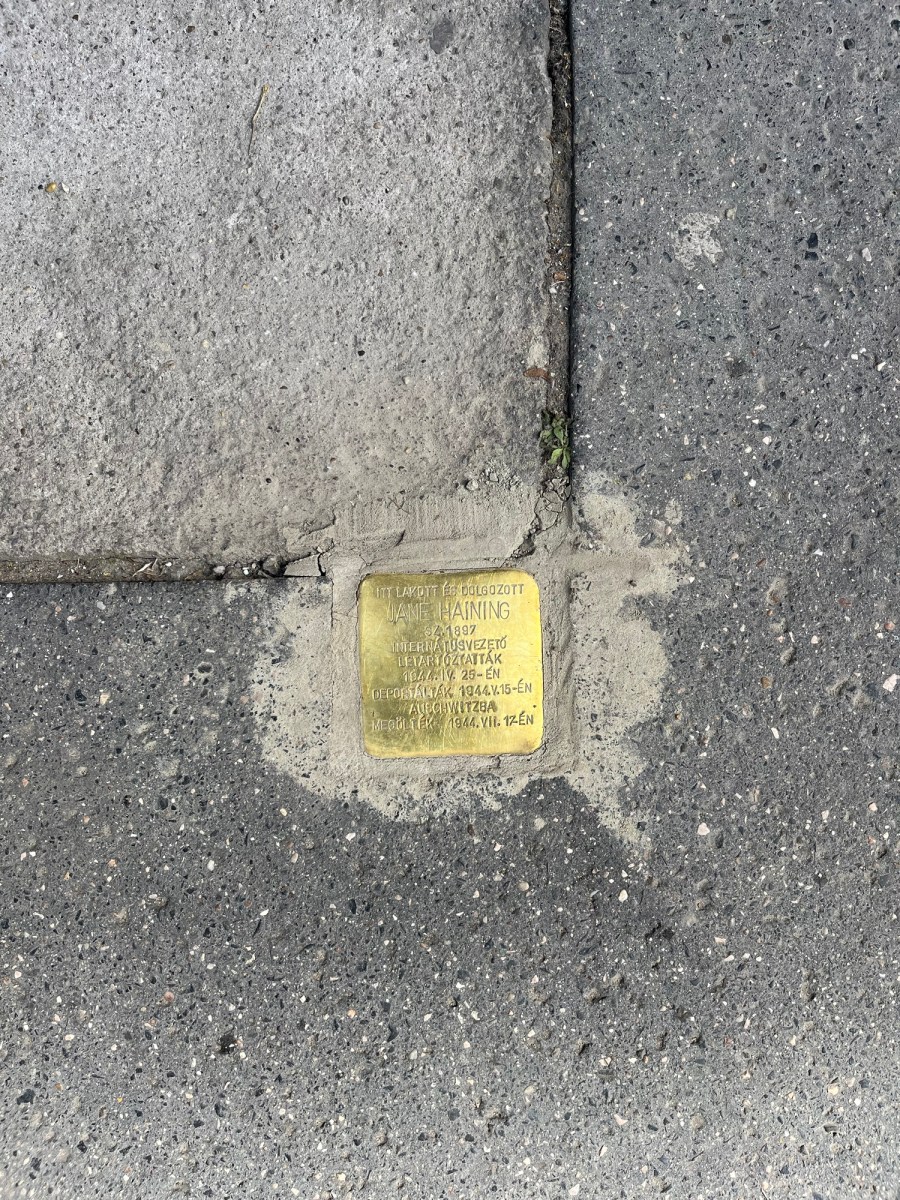
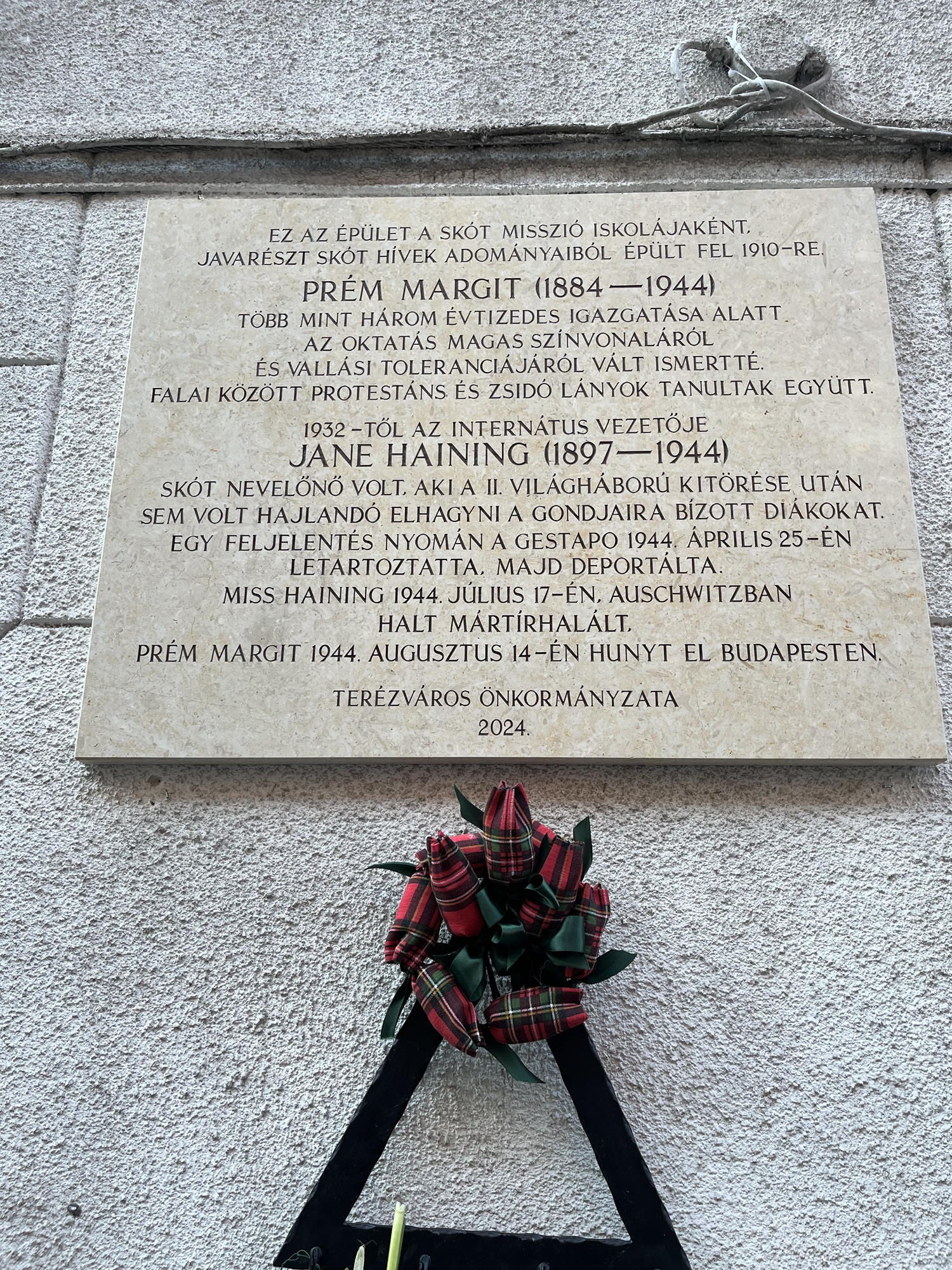
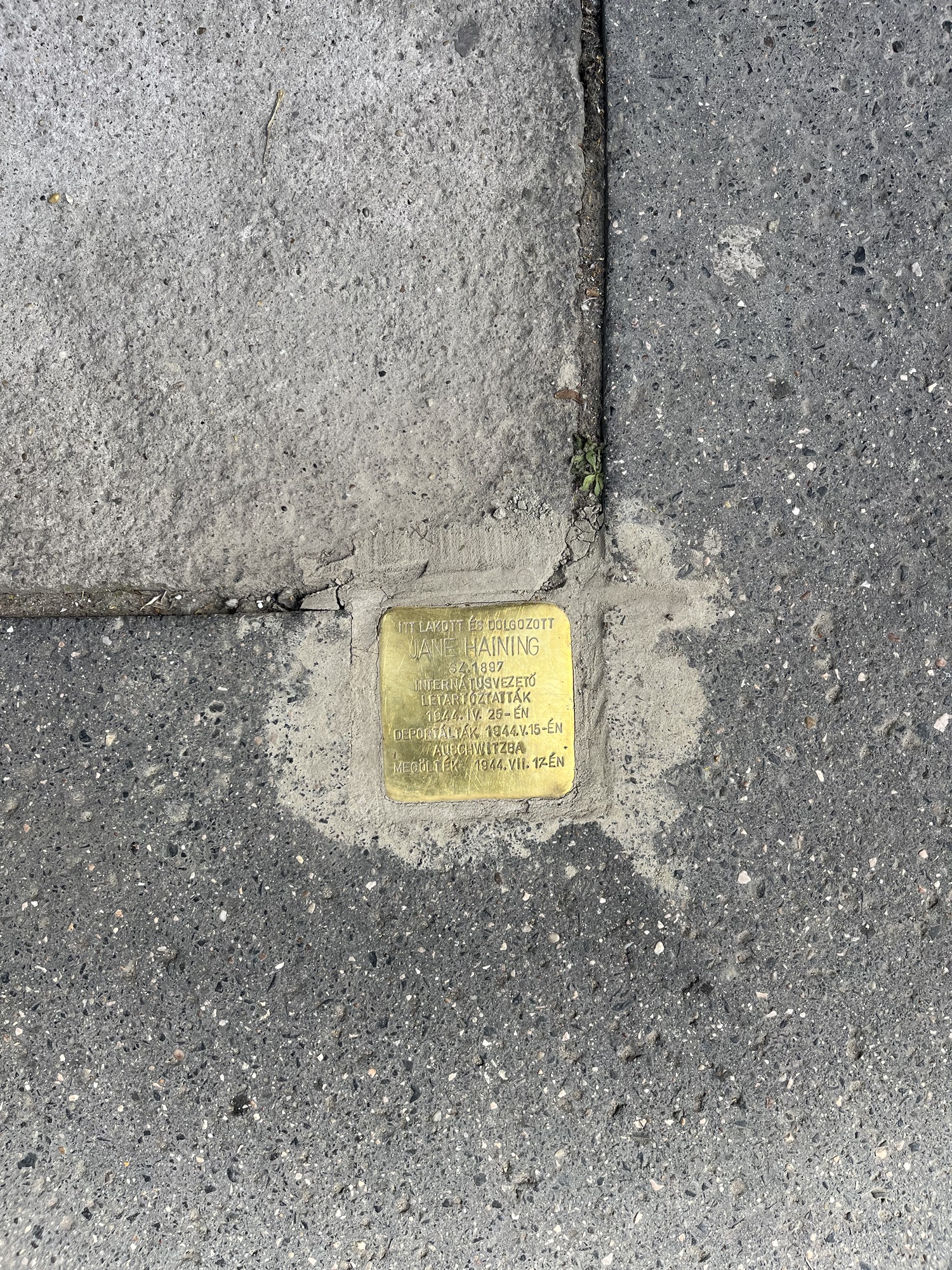
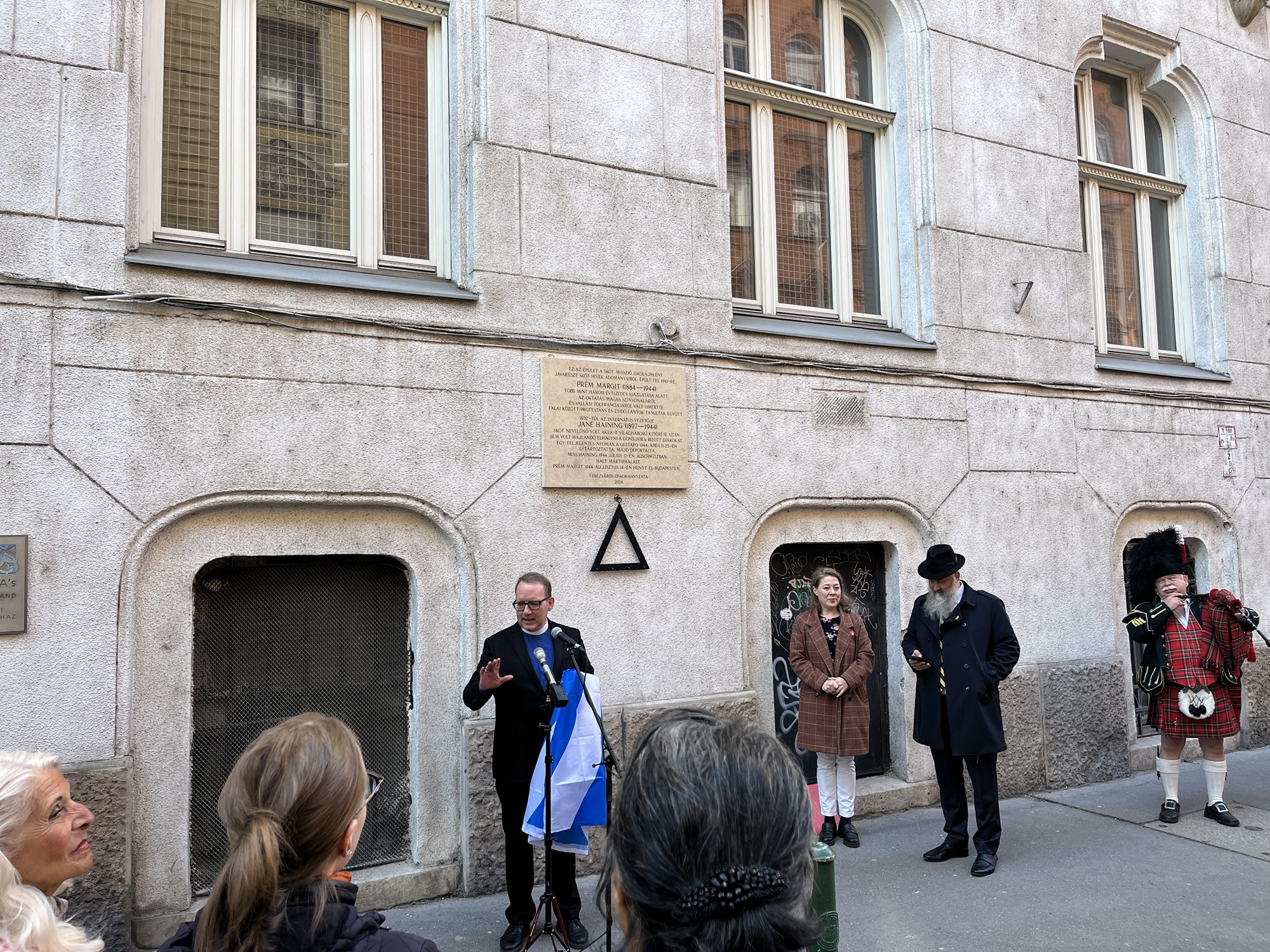
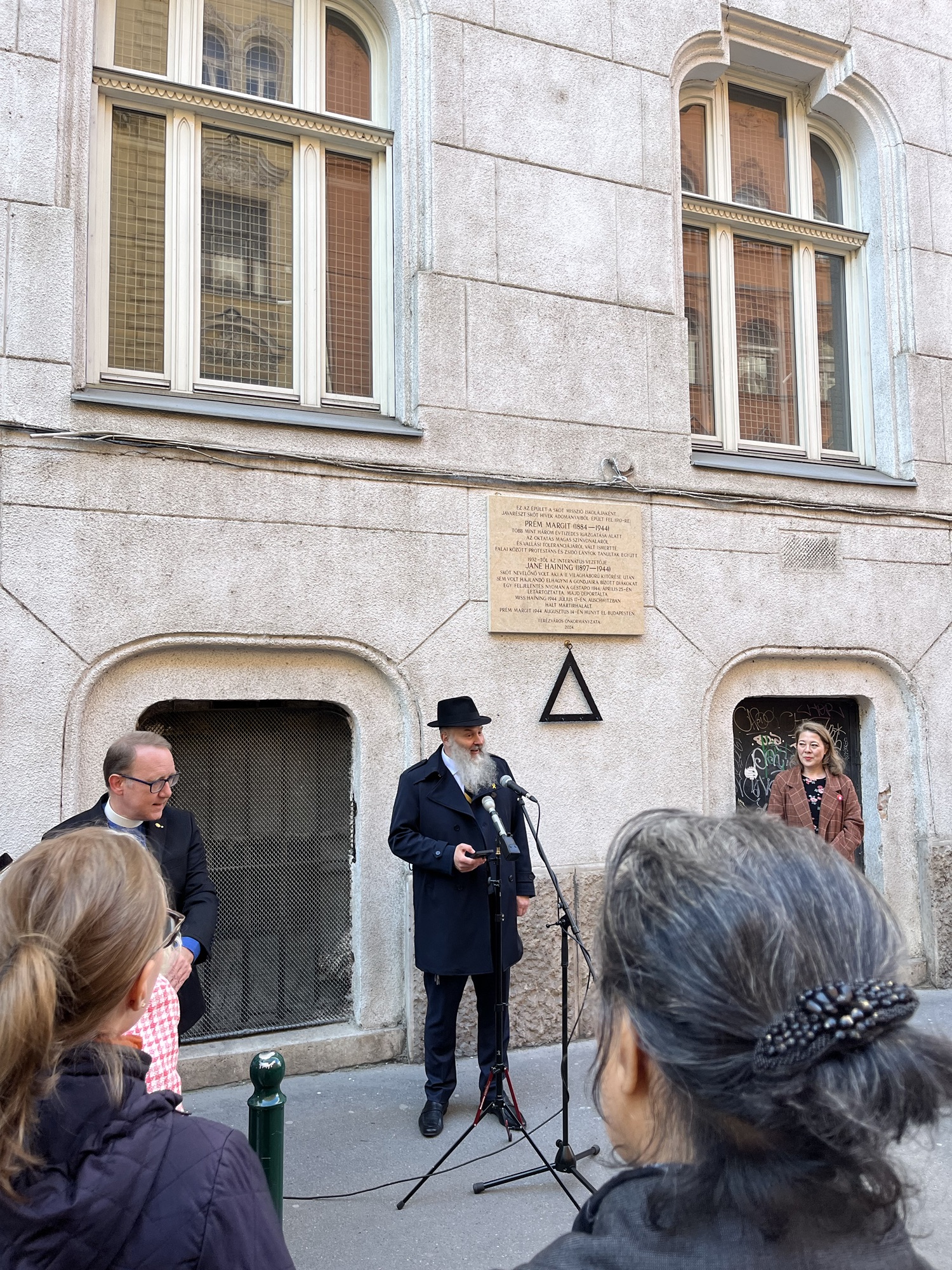
In April, a new plaque was unveiled on the exterior of the building, the first memorial to commemorate Haining and Prém together.1 Also, a Stolpersteine (stumbling stone) was installed at the entrance. The Stolpersteine are common across Central Europe and mark the locations from which people, primarily Jewish people, were arrested by the Nazis or their local allies. Each stone includes the name, birthdate, date of arrest, deportation information, and their fate. I encounter these stones daily in Budapest and have found them in every city in Europe I have visited in the last several months. Like the “Shoes on the Danube” they are a very tangible reminder of World War II, the Holocaust, and the legacy of both. And the opportunity to witness the installation of the Stolpersteine for Jane Haining is something I will remember for a long time.


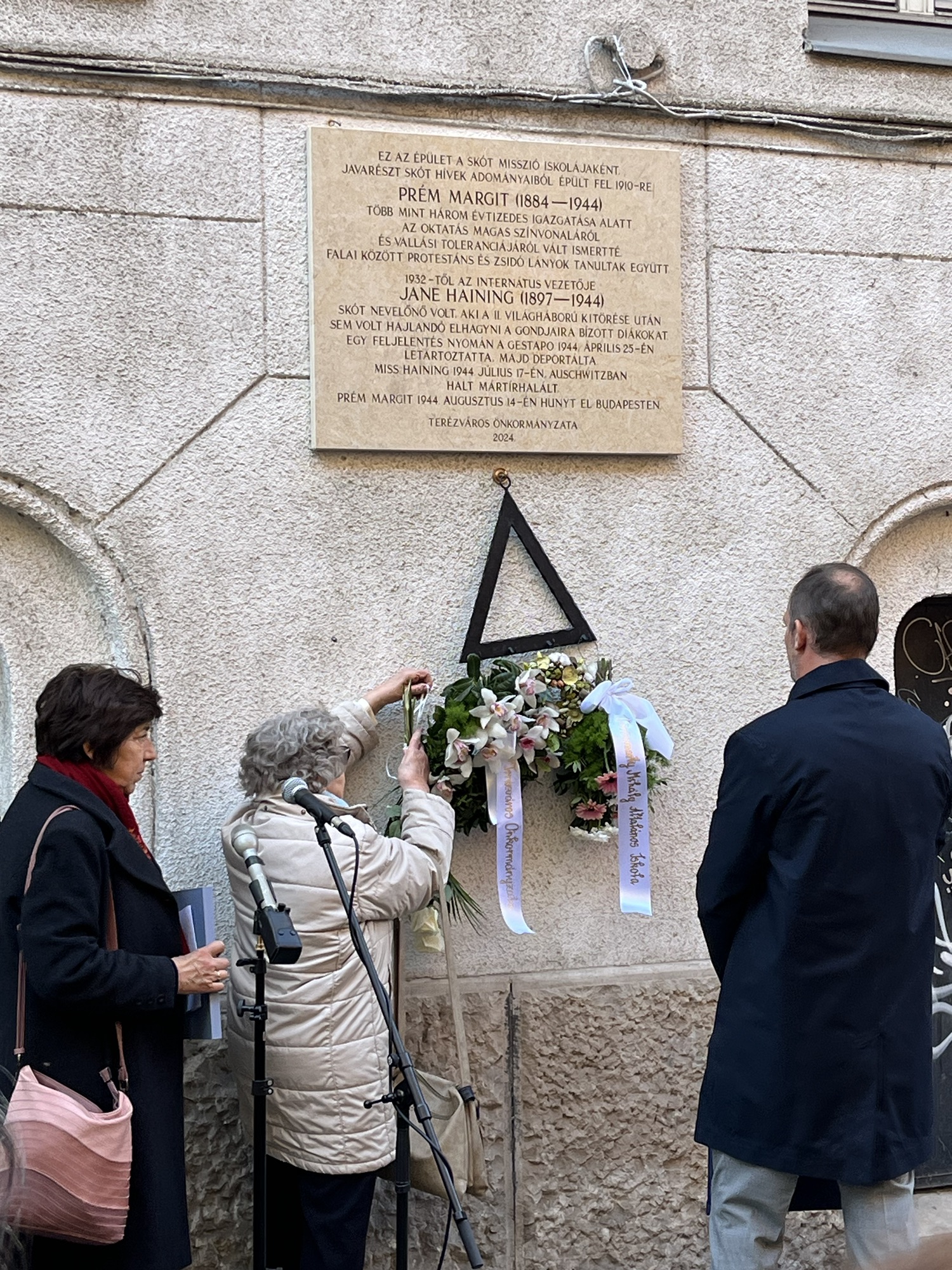
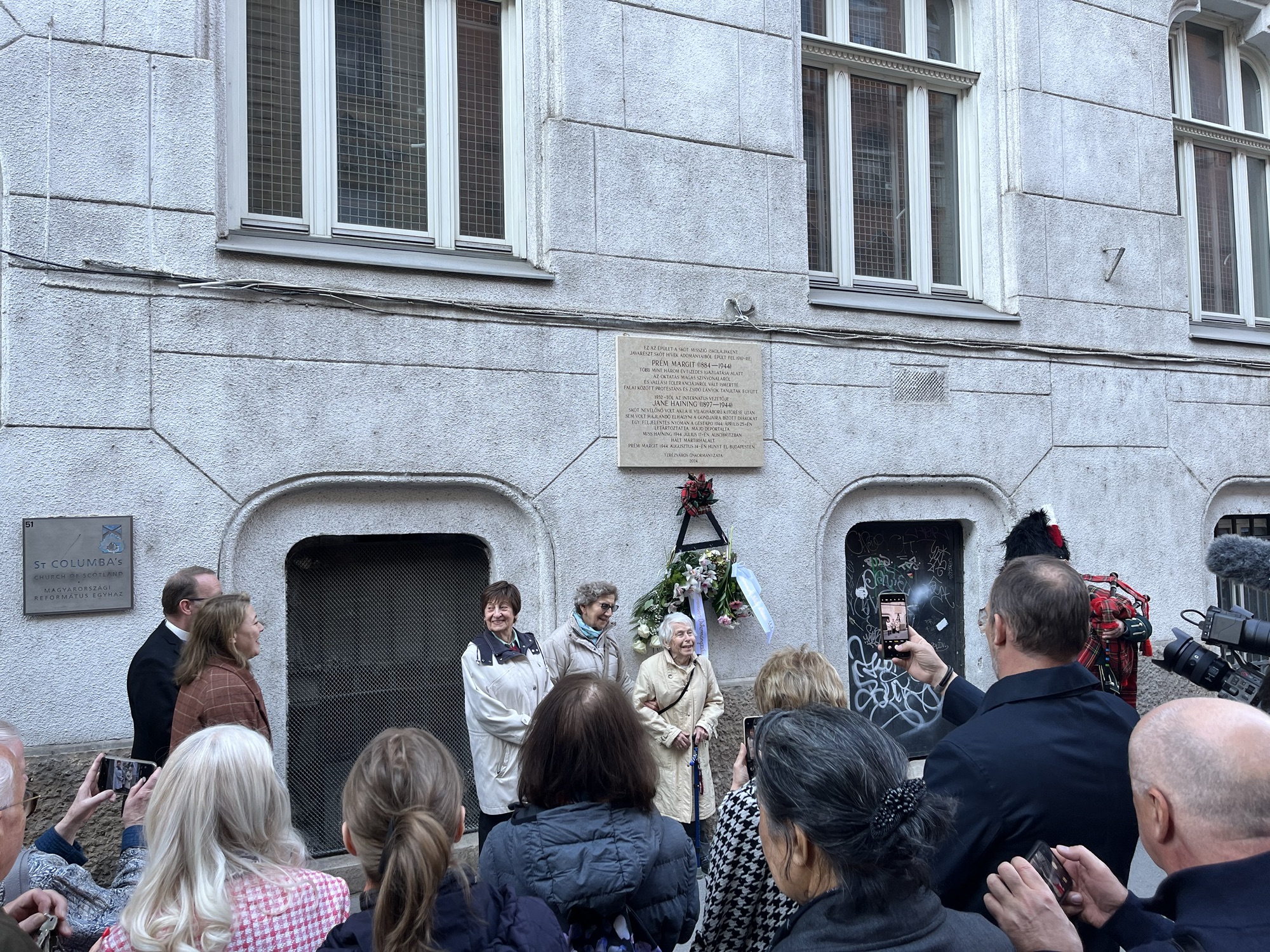

- A good write up about the event, Jane Haining and Margit Prém can be found here: https://churchofscotland.org.uk/news-and-events/news/articles/budapest-honours-scots-holocaust-heroine-who-died-in-auschwitz ↩︎
 Patrick C. Leech