As I continue this series of introductory posts, it seemed time to answer one of my most frequent questions: Why Hungary?
Prior to 2013 I had no known connection to Hungary or Hungarians. Yet that year, my wife and I visited Saint George, Romania (RO: Sfântu Gheorghe, HU: Sepsiszentgyörgy) as she was invited to provide a series of educational seminars related to trauma and child development. The sessions were sponsored by the local Red Cross and a US-based NGO operated by an American expat we met through mutual acquittances. I went primarily to help her, but since I was then working in Information Security, we also created a couple single-session presentations about the basics of internet safety.
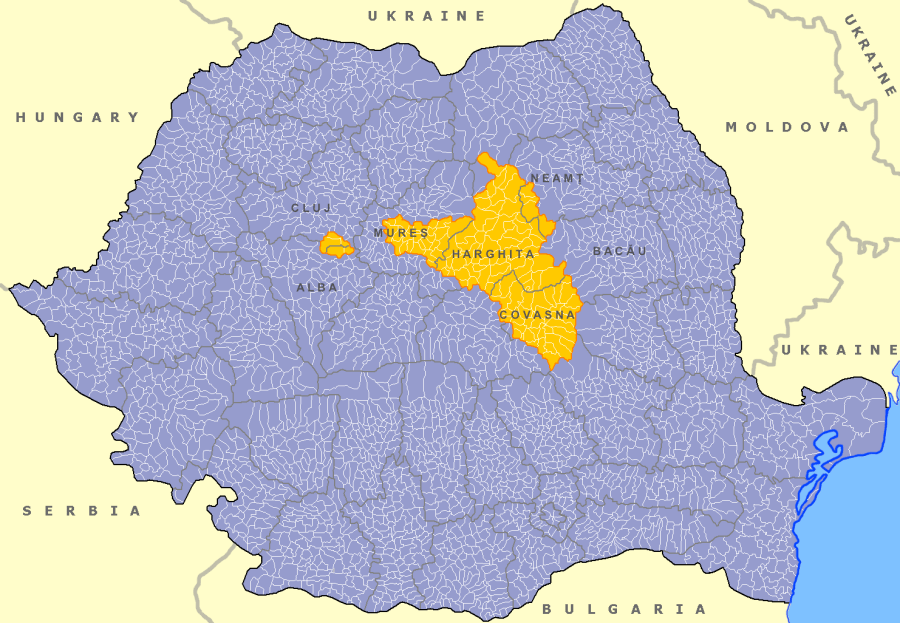
As we prepared, we made a classic American mistake and assumed only Romanians lived in Romania, thus we were quite shocked to learn that Saint George was over 80% Hungarian. Since neither of us spoke Romanian nor Hungarian, that difference was not relevant but as we met the various families who we now consider friends we quickly learned that culturally there was a massive, and relevant, difference. Having failed to do my homework beforehand, I quickly delved into the history of the region and Hungarian culture. Through reading, visiting cultural sites, and conversations with friends, we learned the complicated history of Transylvania and particularly that of the Székelyföld—a predominantly Hungarian-speaking region in the Carpathian basin where the Southern and Eastern Carpathians mountains intersect in central Romania. Over successive trips we continued to learn about the history of the area and its various peoples while also developing a deep interest for the broader region and a desire to help the peoples living there.
During this time, I enrolled in the graduate history program at Texas A&M University – Central Texas where I focused on the political and military history, particularly during the 20th Century. When looking for a thesis project related to the Cold War, I realized that Eastern Europe, particularly Hungary and Romania, offered a number of possibilities as they were largely omitted from the histories of the Cold War. Since I lacked any relevant language skill, I looked for accessible materials and soon found the papers of Tracy S. Voorhees whom President Dwight Eisenhower appointed to oversee the Hungarian refugee relief program in the US in the aftermath of the 1956 Uprising. That material informed my master’s thesis and set me on a path toward my current research about the role of Hungarian American communities in that resettlement (which I discuss in more detail here).
 Patrick C. Leech
Pingback: The Treaty of Trianon (1920) & the Memorial of National Unity (2020) – Patrick C. Leech