This past week I attended orientation with the Hungarian-American Fulbright Commission which allowed me to meet the other students and scholars visiting Hungary from the US. In addition to crash courses in language, culture, music, politics, economics, higher education, and living abroad, we also had a couple of guided tours. So, it seems an appropriate time to launch a recurring series, Travelogue. -PCL
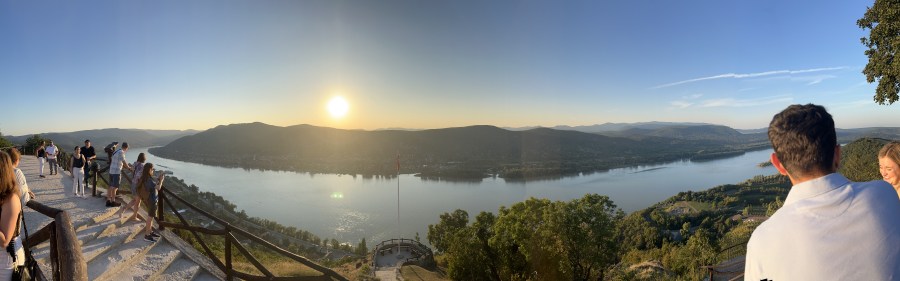
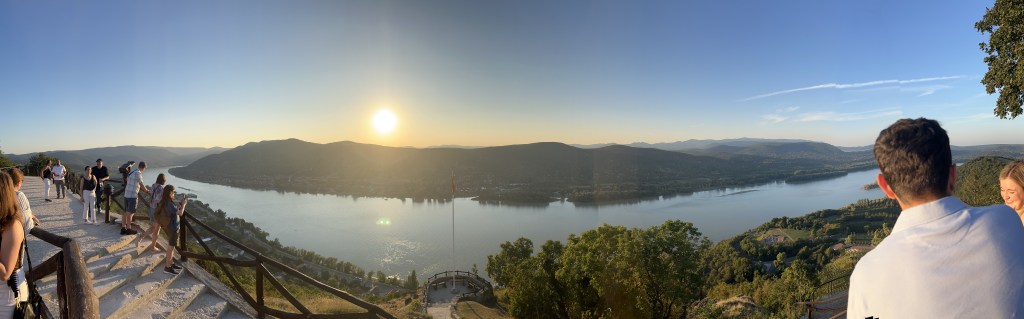
Hungary’s position on the Danube River made it strategically significant for most of its existence. One of the most important stretches of the river is a series of bends that dramatically turn the Danube. The nearby mountains cause the bends yielding the perfect combination of rugged terrain and strategic importance for watch towers and other fortifications.
For the Hungarians, the most important is in Visegrád. The old fortress, sited atop a mountain, has a commanding view of the river. Because of the importance of this area, and its ease of defense, the kings of late-medieval Hungary adopted the site for a summer palace.
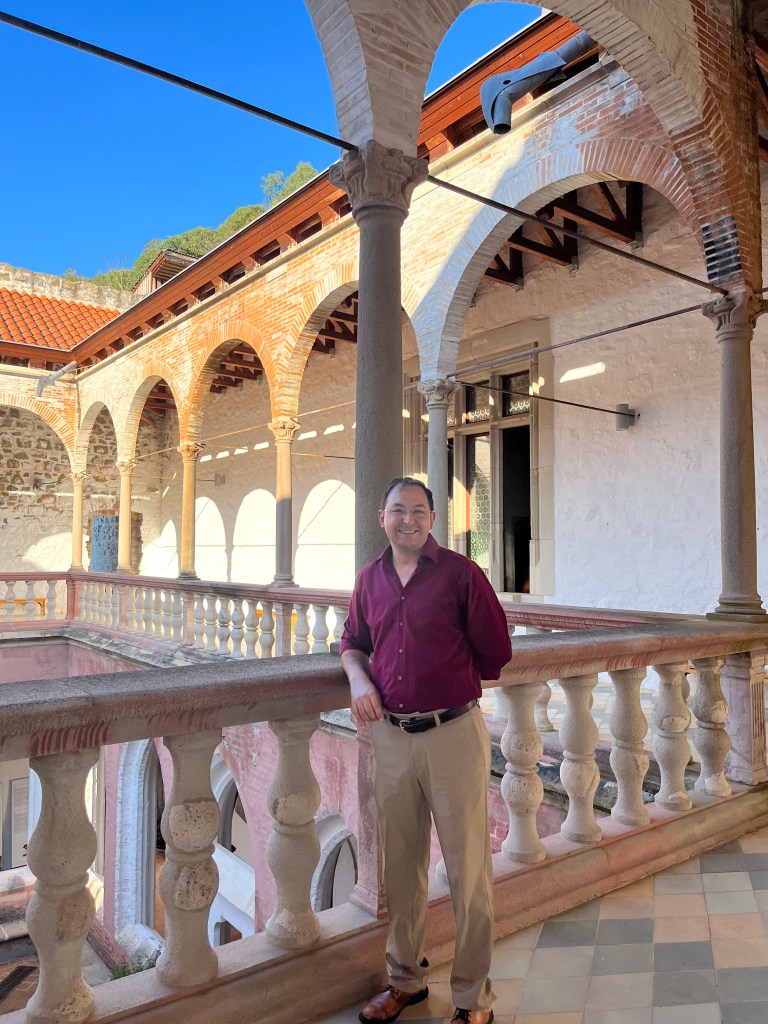
In Hungarian history, one of the two most celebrated kings is Hunyadi Mátyás (Matthias Corvinus) who reigned from 1469-1490.[1] At Visegrád, Mátyás launched a major building program that produced a beautiful residence in the Italian Renaissance style now called the Mátyás Királyi Palota. The palace fell into ruin after the Ottoman conquest and eventually was completely buried before being rediscovered in 1934. As such the site is an active archeological but the government has invested in its restoration as well.
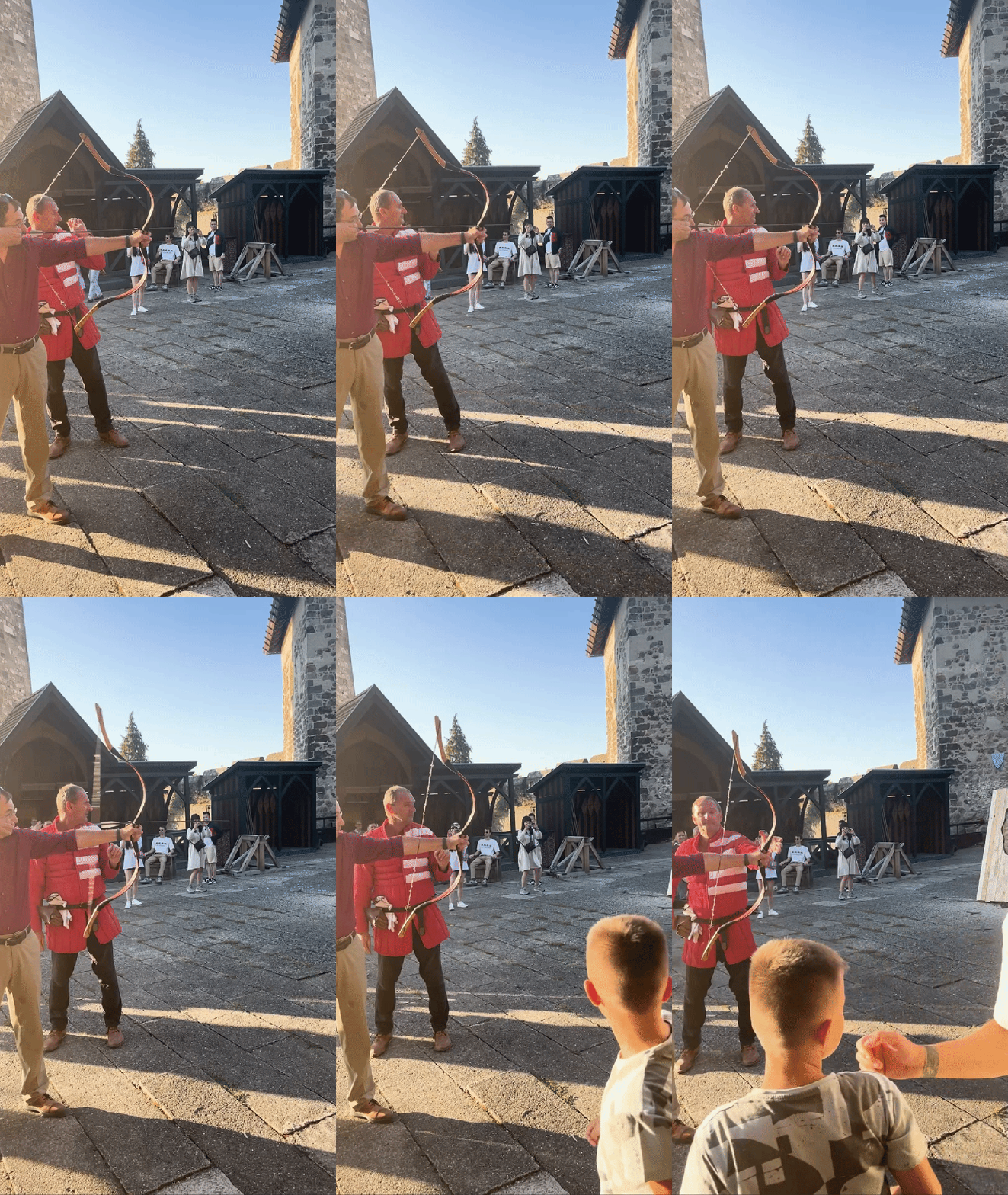
The restoration work serves two purposes. The first, and most obvious, is tourism. The site combines medieval ruins, archeology, and picturesque views of the Danube. Additionally, the site is part of a series of adjacent fortifications, one of which is used to house medieval tournaments featuring axe-throwing, archery, falconry, and sword-fighting demonstrations, followed by interactive experiences afterward.
The second reason for the restorations is political. Visegrád is the namesake for the Visegrád Four (V4) partnership between Hungary, Poland, Czechia, and Slovakia. The official history of the site tells of how Mátyás hosted the kings of Bohemia and Poland and forged a peaceful cooperation. The historical reality is more complicated, as Matyas warred against and allied with most of his neighbors at some point during his reign. Yet, a medieval heritage the modern cooperative agreement between these four post-communist states in Central Europe is particularly important to Hungary within its European politics. These days the V4 relationship is strained, particularly over Hungary’s stance on the Russian invasion of Ukraine. Nevertheless, the cooperation is important enough for the government to spend millions of forints to restore its purported historical home.
[1] In Hungary, he is simply Mátyás királyi (King Matthias). The “Corvinus” appellation is derived from the black crows (Latin: corvus) that are included in the Hunyadi coat of arms.
 Patrick C. Leech